
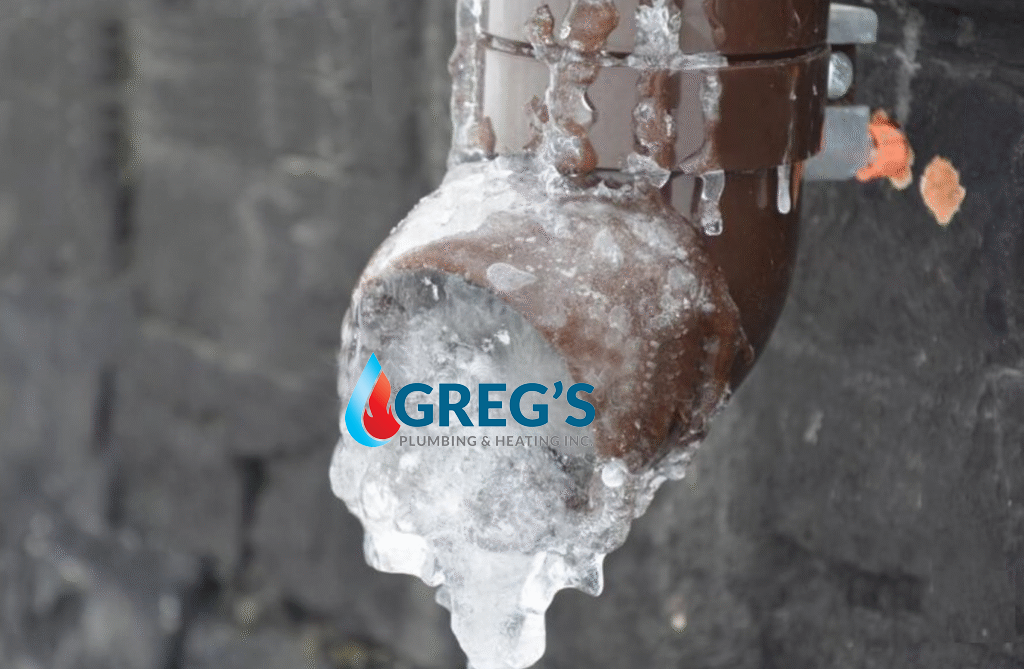
Hamilton’s winter swings, lake wind, sudden thaws, overnight deep-freezes, make frozen pipes a real risk in older homes, exterior-wall kitchens, garages, and crawl spaces. When a line ices up, pressure can spike and split the pipe as it thaws. The goal is simple: confirm the freeze, thaw it safely, and prevent a refreeze tonight, without causing a burst or a fire.
This homeowner guide walks you through what to check first, what not to do, a safe step-by-step thaw, and the exact moves if a pipe has already burst. If water is on the floor or you can’t find the frozen section, shut the main and call us—905-928-6831—or Book Online for same-day help across Hamilton and area. For fast shut-off steps, see our How to Shut Off Your Main Water Valve in Hamilton.
TL;DR
- No open flames. Use gentle, moving heat (hair dryer on low, warm towel wraps).
- Open the faucet first. Warm from the faucet end back so meltwater has a path out.
- See bulging or hear spraying? Shut the main immediately (use the guide above) and call.
- Prevent a refreeze tonight. Pencil-thin drip, open cabinet doors, add safe heat, insulate obvious runs.
- Same-day help in Hamilton. Thawing + leak repair: 905-928-6831 or Book Online.
Signs Your Pipes Are Frozen (and where to look)
A frozen section usually shows up as no flow or a thin trickle at one tap while other fixtures work normally. You may also see frost on exposed pipe or bulging at a joint. Start checks at the coldest parts of the home—exterior walls and unheated spaces.
Quick locator table
| Where freezes most in Hamilton homes | What you’ll notice first | Fast check you can do |
|---|---|---|
| Under kitchen sink on an exterior wall (common in older Dundas/Ancaster bungalows and urban Hamilton semis) | Cold side dribbles, cabinet feels icy | Open cabinet doors; feel the back wall. If the supply line is rigid and frosty, you’ve likely found it. |
| Garage or crawl space lines (Stoney Creek mountain & rural Binbrook) | Hose bibs dead; laundry cold feed stops | Look along the ceiling band and rim joist; you may see frost or condensation beads. |
| Overhangs/cantilevers (kitchens over porch) | Both hot and cold weak at the same sink | Peek into the basement ceiling below—often there’s a soffit chase; listen for a “crunchy” ice sound when gently touching insulation. |
| Bathrooms over unheated spaces | Toilet fills slowly; shower trickles | Check the shut-off valves behind the toilet or in the vanity—stiff valve + frosted line is a clue. |
| Meter area / main coming from street (front basement) | Entire house low or no pressure | Feel the pipe right after the meter. If frosty and rock-hard, the freeze is near the entry point. |
Tip: If one fixture is affected, the freeze is usually between that fixture and its branch tee. If several fixtures on the same floor are weak, the freeze is likely on the branch line feeding them. If whole-home flow is down, suspect the main near the meter.
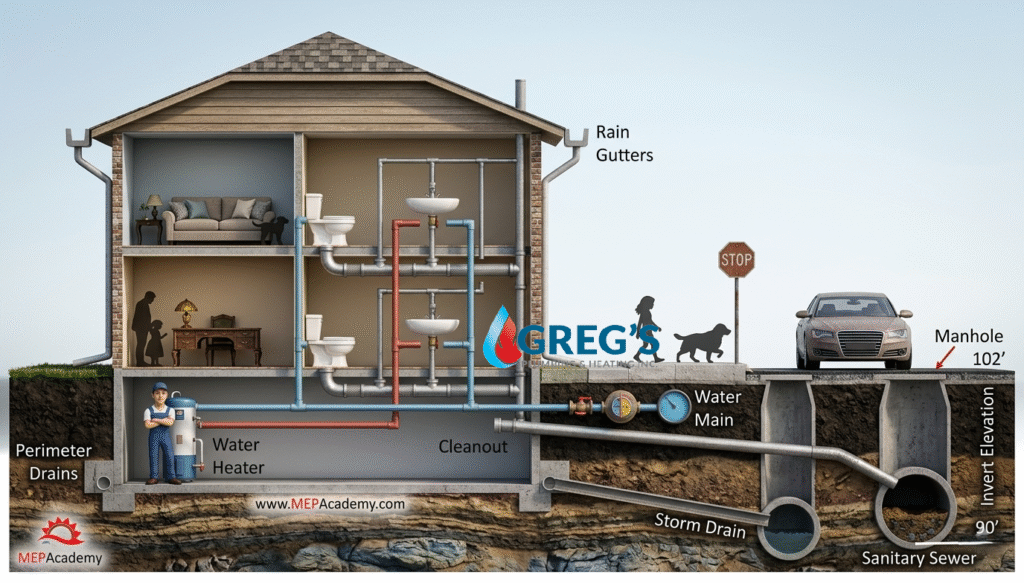
Visual cues to confirm
- Frost or condensation on copper or PEX in unheated areas.
- Bulging at fittings (a warning sign for a pending split).
- Unusual sounds when opening a tap: a brief hiss, gurgle, or nothing at all.
Important: If you spot bulging or hear spraying in a wall/ceiling cavity, shut off the main immediately and follow our main shut-off guide before proceeding. For after-hours help, see What to do now—Emergency Plumber Hamilton.
What Not to Do
Don’t Use Open Flame—Ever
Torches, lighters, and propane heaters ignite cabinets and framing, soften PEX, and overheat copper in seconds. Most frozen-pipe fires start this way. Use gentle, moving heat only.
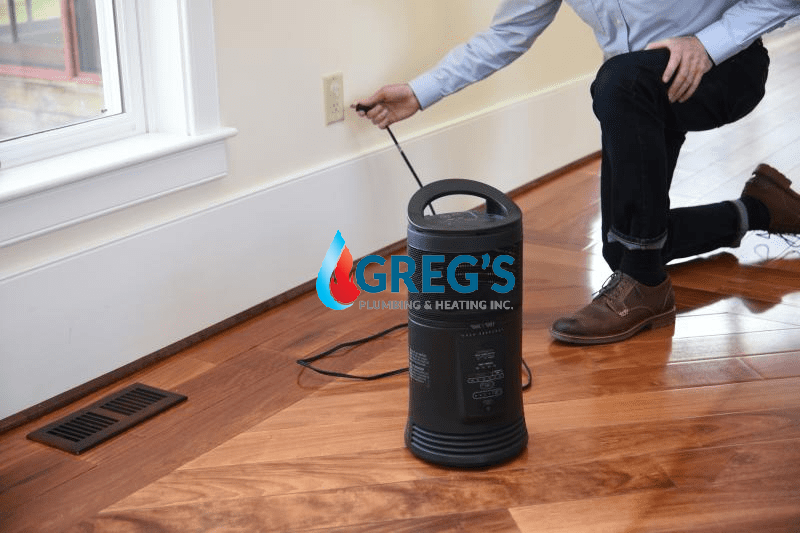
Don’t “Roast the Room”
Blasting a wall cavity with a space heater cooks paint and wiring before the pipe thaws. If you must use a heater, warm the room or cabinet air on low, keep CSA clearances (typically 1 m), and never leave it unattended.
Don’t Strike, Bend, or “Massage” the Pipe
Ice turns tubing brittle. Hammering, flexing, or squeezing a frozen section causes hairline splits that appear once pressure returns.
Don’t Force Valves or Crank the Main Tighter
A stiff main or stop valve can shear if forced, turning a trickle into a flood. If you suspect a split or hear spraying, shut the main gently and follow our Hamilton shut-off guide.
Don’t Mix Electricity and Meltwater
Keep cords, plugs, and heat tools off wet floors. If outlets are damp or you see arcing/sparking, leave the area and shut the breaker for that circuit from a dry spot. When in doubt, call a pro.
Don’t Ignore Gas Smells or Electrical Sizzling
If you smell gas or hear electrical sizzling behind drywall, stop immediately, evacuate, and call your utility/911 before any thawing attempts.
Quick Reference: Safe vs. Unsafe Heat
| Use (controlled, contactless) | Avoid (high risk) |
|---|---|
| Hair dryer on low/medium, keep moving (15–20 cm away) | Open flame (torch, lighter) |
| Heat gun on low only, short passes | Kerosene/propane heaters in tight spaces |
| Warm towel wraps, swapped every 5–10 min | Boiling water on pipes/valves |
| Portable heater warming room/cabinet air (observe CSA clearances) | Unlisted/damaged heat cables; non-GFCI outlets |
If you see bulging, misting, or hear spraying: stop, shut the main, and call 905-928-6831 or Emergency Plumbing—What to Do Now.
Step-by-Step: Thaw a Frozen Pipe Safely
Small, steady heat at the right spot beats big heat in the wrong place. Work slowly; plan for drips.
Prep
Crack the affected faucet slightly open (hot or cold as applicable). This relieves pressure and tells you when flow returns.
Lay towels and set a bucket under the suspect section or below the vanity. Have a flashlight and a GFCI-protected outlet for any powered tool.
Choose one temperature-safe heat source: hair dryer or heat gun on low, or warm towels. Test your extension cord and keep plugs off damp floors.
If the line may have split—or you can’t see the whole run—note your main valve location and skim our shut-off guide so you can act quickly if needed.
Tip: Move stored items out of the cabinet and open the cabinet doors to let household air warm the space while you work.
Thawing technique
Start at the faucet end and work back toward the frozen section. This gives melting water a path out, lowering burst risk.
Keep the heat moving slowly—a gentle pass for 10–20 seconds per area, rotate around the pipe, then repeat. Don’t park the nozzle in one spot.
For under-sink freezes, direct warm air into the cabinet, then trace the supply line along the back wall or floor to the shut-off. Alternate 2–3 minutes of gentle heat with a minute of rest; check the faucet each cycle.
For basement or crawlspace runs, follow the branch from the main tee toward the fixture. Feel for temperature changes; the first cold, rigid stretch is your target.
When flow returns, let water run for 2–3 minutes. Watch the thawed section closely for weeping or mist—early signs of a split that only shows under pressure.
Pro tip: If you can warm both sides of a fitting (e.g., the valve and the tube just past it), the ice plug releases faster with less heat.
Special cases
PEX (plastic supply): The tubing tolerates some expansion, but fittings (brass or plastic) and crimp rings can crack. After thawing, run the line and inspect every joint with a dry tissue—any damp ring means a slow leak.
Copper: Long, fine seam splits often hide until pressure builds. After flow returns, dry the pipe and check again in 10 minutes. A faint green line or “sweat” under light is a red flag.
Meter/main entry: If the freeze is near the meter or main from the street, avoid heat guns here. Use warm towels and ambient warming. If the whole home is affected and the entry is frosted solid, it’s safer to call a licensed plumber—these areas sit near electrical bonding and sensitive components.
Crawl spaces/attics: Work with a second person on watch, keep cords high, and have the main shut-off in reach. Do not operate heat sources around blown-in insulation or vapour barriers without clear space.
ABS/PVC drains: If the drain is frozen (rare, but possible in unheated garages), do not use heat guns—traps can deform. Use warm towel wraps and room-air warming only.
Inline CTA
Frozen or burst? Call 905-928-6831 — Licensed Hamilton plumbers for same-day thawing and leak repair. Prefer online? Book Online in seconds. Need emergency help now? See Emergency Plumbing.
If a Pipe Bursts: First-Hour Checklist
1) Shut Off the Main Water
Go straight to the valve beside the meter and turn clockwise until it stops. If you’re unsure, use our Hamilton main shut-off guide.
2) Make the Area Electrically Safe
If water is near outlets or a power bar, switch that circuit breaker OFF—only if you can reach the panel while standing on a dry surface. If not safe, keep clear and wait for a pro.
3) Drain Down the System
Open the lowest faucet in the house (often a basement laundry tub) to let lines empty. Crack a higher faucet to let air in. Place a bucket under the burst.
4) Capture and Contain Water
Move furniture, lay towels, and set a container under the leak. If a ceiling is bulging, do not poke it—there may be wiring above.
5) Document for Insurance
Take clear photos and a short video of the burst, affected rooms, meter reading, and any damaged items.
6) Call Help in Parallel
Call 905-928-6831 or Book Online. If floors/walls are soaked, ring your restoration company as well. While you wait, see Emergency Plumber: What to Do Now.
7) Prevent Secondary Damage
Lift rugs, run fans to move air across wet surfaces, and keep indoor heat at 20–22 °C. Avoid using shop-vacs near live outlets.
Quick Reference: Water + Electricity
| Situation | Safe action |
|---|---|
| Small puddle, outlets dry | Unplug nearby devices; run a fan. |
| Water near outlets/power bar | Turn breaker OFF if you can reach it dry. |
| Drip through a light fixture | Leave the room, shut the lighting circuit or main, call for help. |
For permanent fixes and re-routes, see Leak Repair.
Prevent a Refreeze Tonight
Keep a Pencil-Thin Drip
Let the farthest cold-side faucet drip (~0.5–1.0 L/hour). Flow relieves pressure and keeps water moving.
Open Under-Sink Doors
On exterior-wall vanities and kitchens, open doors to let room air warm the cavity. Move cleaners out of the way first.
Add Smart, Safe Heat
Use a portable heater on low, aimed into the room, not at the pipe. Maintain CSA clearances (typically 1 m) and never leave it unattended.
Seal the Obvious Drafts
Stuff a temporary foam strip or towel at rim-joist gaps and hose-bib penetrations. Permanent air-sealing can wait until daytime.
Insulate the Exposed Run
Slip on foam sleeves or wrap fibreglass and tape the ends. Even 1–2 m of insulation near an exterior wall helps.
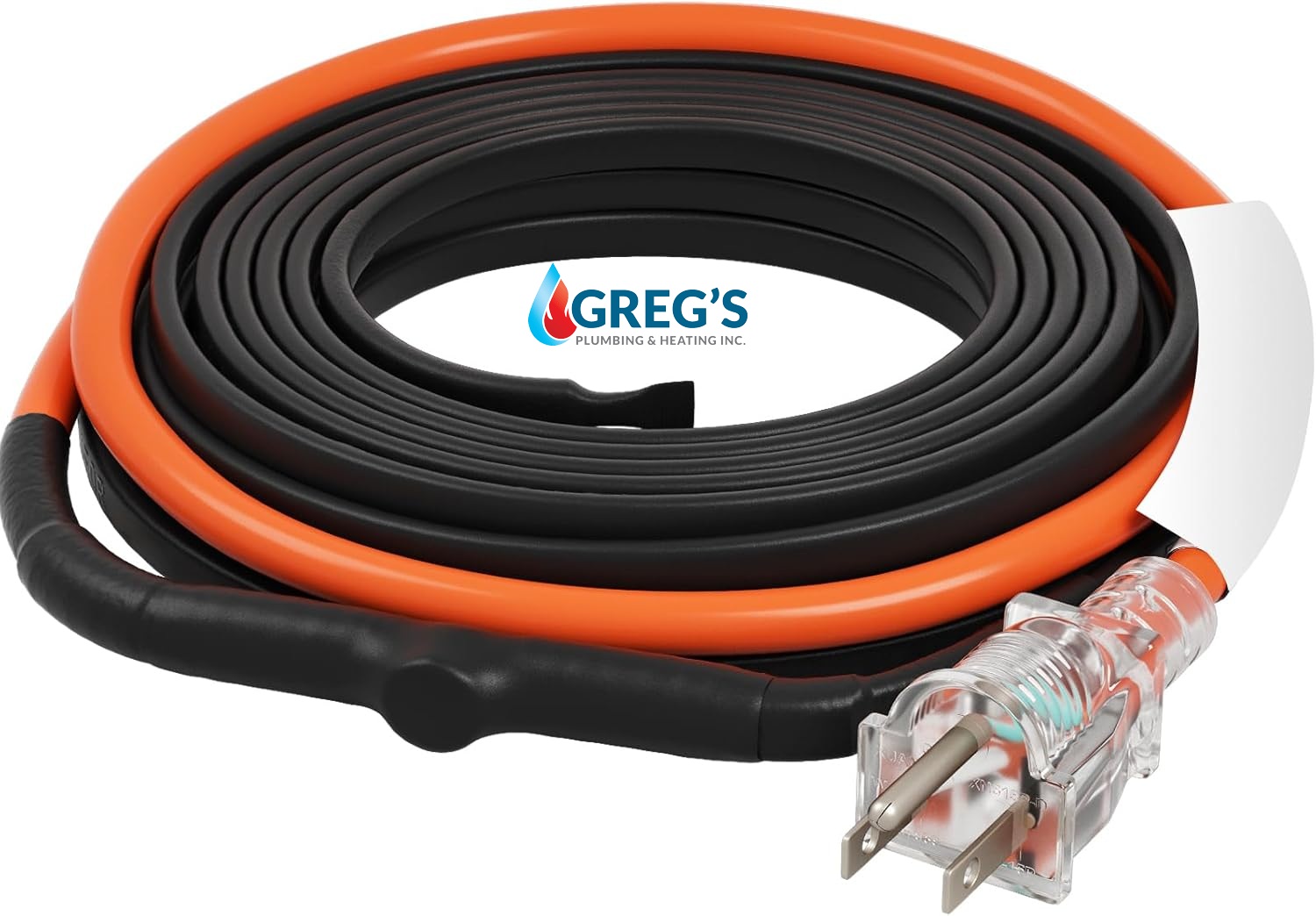
Use Self-Regulating Heat Trace (Chronic Spots)
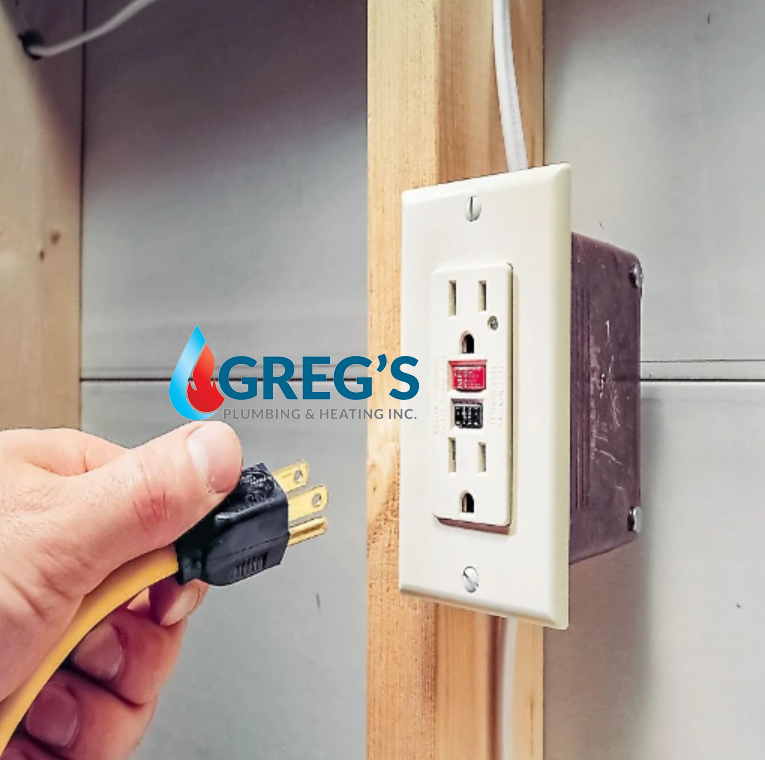
\Install a UL/CSA-listed cable on problem runs with a GFCI outlet. Never overlap cables. We supply and install heat trace during daylight service.
Shut and Drain Exterior Branches
Remove hoses, close exterior valves, and (if you have interior shut-offs) close and drain those stubs. Plan a frost-free hose bib upgrade in spring.
Hold a Steady Thermostat
Avoid deep night setbacks. Keeping 20–22 °C overnight prevents wall-cavity temps from dipping below freezing.
Need Overnight Help?
Our Emergency Plumbing team handles after-hours thawing and temporary bypasses across Hamilton, Burlington, Ancaster, Dundas, Stoney Creek, Grimsby, Binbrook, Caledonia, Niagara Falls. Call 905-928-6831.
Long-Term Prevention in Hamilton Homes
Add Self-Regulating Heat Trace (with GFCI)
On lines that freeze every cold snap—garage runs, rim-joists, kitchen overhangs—install a self-regulating heat cable on the pipe and plug it into a GFCI-protected outlet. It ramps output with temperature, reducing energy use and fire risk. Label the breaker and test the GFCI monthly.
Upgrade Exterior Hose Bibs to Frost-Free
Legacy sillcocks hold water in the cold wall. A frost-free hose bib shuts off inside the warm space and drains the stub when you close it. Pitch the pipe slightly outward and use an interior shut-off with a drain cap for winterization.
Re-Route Lines Out of Exterior Walls
During kitchen/bath renos, move supplies out of the exterior stud bay and into the conditioned zone (ceiling chase, toe-kick, or interior wall). Where reroute isn’t possible, add continuous insulation behind the cabinet and run lines in front of insulation.
Air-Seal and Insulate the Envelope
Cold air washing over pipes is the root cause. Seal rim-joists, pipe penetrations, and sill plates with foam/caulk, then insulate (rigid or batt). Under sinks on outside walls, add a thin foam backer panel and keep a small air gap between pipes and exterior sheathing.
Add Isolation Valves and Drains
Give problem branches their own ball valve + drain so you can winterize a run without killing the whole house. Label valves clearly so any family member can use them.
Smart Thermostat & Zonal Heat
Avoid deep setbacks during polar dips. Program a hold at 20–22 °C on extreme nights, and use zonal heat to keep vulnerable rooms slightly warmer.
Need a pro plan? We can map your cold spots and recommend fixes that prevent repeat emergencies. See Leak Repair or our Hamilton plumbers hub.
When to Call a Hamilton Plumber
You Can’t Find the Freeze—or It Keeps Returning
If only part of a branch works and you can’t access the chase, it’s time for diagnostics (thermal imaging, pressure tests) and a permanent reroute.
You See Bulging, Weeping, or a Split
Any bulge, greenish stain on copper, or damp ring at a PEX fitting means damage. Shut the main (use our shut-off guide) and call.
Older Copper, Mixed Metals, or Finished Spaces at Risk
A hidden split behind drywall can soak insulation and wiring. We’ll open minimally, repair, and dry the cavity to prevent mould.
Frozen Near the Meter or Electrical Bonding
Entry points and meters sit beside bonding clamps and sensitive components—best handled with controlled thawing and proper grounding checks.
You Need Heat Trace, Frost-Free Bibs, or Valve Upgrades
We install heat cables (with GFCI), frost-free hose bibs, and labelled isolation valves so winter prep becomes a 2-minute job.
If you’re unsure, err on the safe side—Emergency Plumbing gets you same-day help. For fast booking, 905-928-6831 or Book Online.
Conclusion
Frozen pipes don’t have to turn into a renovation. Work slowly, warm the pipe (not the room), and watch for any sign of a split. If you can’t find the frozen section—or you spot bulging, weeping, or spraying—close the main water and call a licensed pro.
Same-day help: 905-928-6831 or Book Online. We serve Hamilton, Burlington, Ancaster, Dundas, Stoney Creek, Grimsby, Binbrook, Caledonia, Niagara Falls. For fast actions, see Emergency Plumbing and our Hamilton shut-off guide.
FAQs: Frozen Pipes in Hamilton
How long does it take to thaw a frozen pipe safely?
Most accessible freezes thaw in 15–60 minutes with gentle, moving heat (hair dryer on low, warm towel wraps). Hidden freezes in walls, garages, or crawl spaces can take longer. If there’s no progress after 45 minutes, or you can’t access the full run, call 905-928-6831 for same-day thawing.
How do I know if the pipe burst or is just frozen?
A silent trickle/no flow usually means frozen. Bulging, hissing, misting, or water stains point to a split. If you hear spraying behind drywall or see bulging joints, shut the main and follow our Hamilton shut-off guide, then Book Online.
Should I leave a faucet dripping during a cold snap?
Yes—on known problem runs, keep a pencil-thin drip overnight. Moving water reduces pressure build-up in ice plugs and helps prevent bursts. Target a steady thread from the farthest cold-side tap on that branch.
What thermostat setting prevents frozen pipes?
Hold indoor temps 20–22 °C during extreme cold and avoid deep setbacks. A drop from 21 °C to 16 °C overnight can pull wall-cavity temps below zero—especially on exterior-wall kitchens and vanities.
Can PEX pipes burst, or are they “freeze proof”?
PEX can expand more than copper, but fittings and valves can still crack, and PEX can split under repeated freeze/thaw. After thawing, run water and check every joint with a dry tissue—any damp ring means a leak. We handle permanent fixes: Leak Repair.
Are heat cables safe to use on water lines in Ontario?
Use a UL/CSA-listed self-regulating heat trace on potable lines, powered by a GFCI receptacle. Never overlap the cable, and follow the manufacturer’s instructions. We supply/install heat trace and label the circuit for you—ask our Hamilton plumbers.
Who can shut my water at the curb if my main valve won’t turn?
If your interior main won’t budge or fails, you can request a curb-stop (property line) shut-off via the City. Until then, limit damage: open the lowest faucet to drain down, kill power near water if safe, and call 905-928-6831 or Emergency Plumbing.
Does home insurance cover frozen pipe damage?
Many policies cover sudden, accidental water damage from a burst pipe, but may exclude losses tied to lack of heat or maintenance. Document everything (photos/video, meter reading) and contact your insurer promptly. We can provide photos and an invoice noting cause and repair.


