When your furnace won’t turn on and your Hamilton home starts cooling down fast, it’s stressful. Before you panic-call every company on Google, there are a few safe, homeowner-friendly checks you can do that might get your heat back on — or at least tell you whether you need a same-day furnace repair in Hamilton.
This guide is written for real “no heat” situations — the kind that happen on a Sunday night in Stoney Creek, a freezing morning in Ancaster, or during a lake-effect wind in Dundas. We’ll walk you through simple checks you can do without taking the furnace apart:
- Power and gas safety checks
- Thermostat settings and batteries
- Filter, airflow and lockouts
- Condensate, drain and vent issues
- What common fault lights and error codes usually mean
If at any point something smells wrong (burning, gas odour) or your furnace keeps shutting itself down, you’ll also see clear reminders to stop and call a licensed tech right away. When it’s time to bring in a pro, the team at Greg’s Plumbing & Heating can help with same-day no-heat calls across Hamilton, Ancaster, Dundas, Stoney Creek, Binbrook and more from our local heating & cooling repairs hub.
1. Safety First: Power, Breaker, Gas Valve and Outdoor Vents
Before you touch the furnace, think safety. Many “furnace not starting” calls in Hamilton end up being a simple power or gas issue — but you still want to approach it carefully.
1.1 Check the Furnace Power Switch
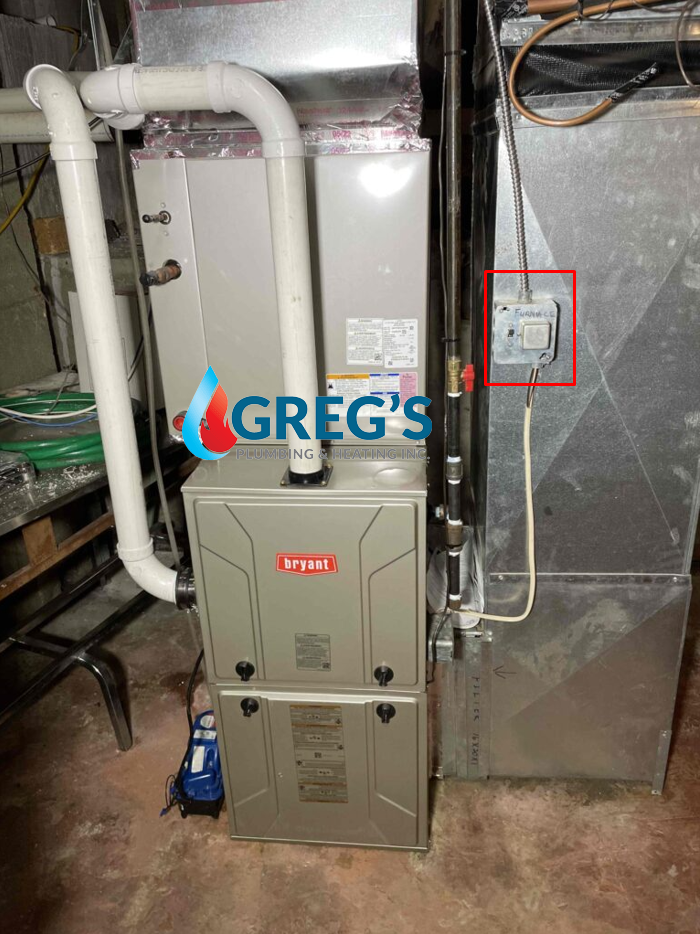
Most forced-air gas furnaces have a light switch nearby, usually on the side of the furnace or on the wall just beside it. It may even be in a regular light-switch style plate and accidentally flipped off.
- Go to your basement, utility room or mechanical room.
- Look for a switch marked “furnace”, “heater” or a plain switch next to the unit.
- Make sure it’s in the ON position.
- If you just turned it on, wait a few minutes to see if the blower or burner starts up.
If the switch was off and now the furnace starts, you may have found your problem. If it keeps turning off again, that’s usually a sign of a deeper issue and a good time to call for furnace repair in Hamilton instead of flipping it repeatedly.
1.2 Verify the Breaker in Your Electrical Panel
If the furnace switch is on but there’s still no life at all (no fan, no hum, no display), check your electrical panel:
- Find the breaker labelled “Furnace”, “HVAC” or “Heat”.
- If it’s in the middle or OFF position, flip it fully OFF, then back to ON.
- If it trips again right away, do not keep resetting it. That can indicate an electrical fault or short.
Repeated tripping is a sign to stop and book a licensed tech. Greg’s Plumbing & Heating handles both electrical lockouts and gas piping issues through our dedicated heating & cooling repairs team.
1.3 Confirm the Furnace Gas Shutoff is Open
If your furnace runs on natural gas, there should be a manual gas shutoff valve near the unit — usually a lever-style handle on the black or copper gas pipe.
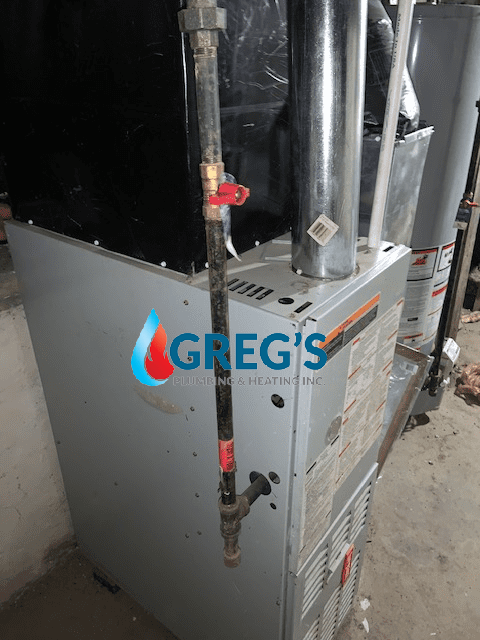
- In most Hamilton homes, the “open” position is when the handle is in line with the pipe.
- The “closed” position is when the handle is across (perpendicular to) the pipe.
If someone recently did work in the area, painted, or moved things around, the gas may have been turned off and not turned back on.
Important:
If you smell gas (rotten egg odour) or hear hissing near the gas line, do not try to turn anything. Leave the house, call Enbridge or 911, and then contact a licensed gas fitter. Greg’s Plumbing & Heating is fully licensed for gas pipe installation and repairs in Hamilton and surrounding areas.
1.4 Make Sure Outdoor Vents and Intakes Are Clear
Modern high-efficiency furnaces (common in Hamilton suburbs like Binbrook, Stoney Creek Mountain and new Ancaster builds) often vent through white PVC pipes that go through the side wall of the house.
Go outside and look for:
- Intake pipe (brings fresh air in)
- Exhaust/vent pipe (sends combustion gases out)
On cold or snowy days, these can be blocked by:
- Snow drifts or ice
- Leaves, mulch, or blown garbage
- Bird nests or debris
A blocked intake or vent can cause the furnace to lock out for safety, leaving you with no heat and a furnace that won’t start.
Do this safely:
- Use a flashlight to look into the openings.
- Gently clear loose snow, leaves or debris by hand or with a small brush.
- Don’t stick tools deep into the pipe or take anything apart.
If you notice repeated vent icing or water dripping heavily from the pipe, mention that when you call. It can help your technician prepare parts for your same-day furnace repair visit in Hamilton.
2. Thermostat Settings and Batteries: The Easy Wins
A lot of “furnace not starting in Hamilton” calls turn out to be thermostat issues. Before you assume the worst, double check the basics on the wall.
2.1 Confirm the Thermostat is Actually Calling for Heat
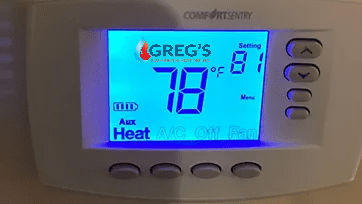
Start with the simple stuff.
- Make sure the mode is set to HEAT, not COOL, OFF or FAN.
- Turn the temperature setting at least 2 to 3 degrees above the room temperature.
- Wait a few minutes to see if you hear the furnace click on or the fan start.
Here is a quick cheat sheet:
| What you see on the thermostat | What it usually means | What to try first |
|---|---|---|
| Set to COOL or OFF | System is not allowed to heat | Change mode to HEAT and raise the temperature |
| Room temp and set temp are same or close | Not really calling for heat | Increase set temp by 3 to 5 degrees |
| “Schedule” or “Eco” showing | Thermostat is following a setback schedule | Try a HOLD or TEMPORARY HOLD at a higher temperature |
| Fan set to ON only | Blower may run without heat | Change fan setting to AUTO, then adjust heat settings |
If your thermostat is set correctly but the furnace still does nothing at all, there may be a control or low voltage issue. That is a good time to call for same day furnace repair in Hamilton instead of guessing.
2.2 Check Thermostat Batteries
Many wall thermostats in Hamilton homes still run on AA or AAA batteries. When the batteries get weak:
- The screen may be dim, slow or completely blank
- The thermostat may not send a strong signal to start the furnace
- You might see low battery icons or odd behaviour
What to do:
- Gently remove the thermostat from its base or open the battery door.
- Replace batteries with fresh, name brand batteries of the same type.
- Put it back on the wall and reselect HEAT mode and desired temperature.
If the display comes back to life and the furnace starts, you may have solved your “furnace will not turn on” problem in two minutes.
2.3 Watch for Bad Thermostat Placement
Even if the thermostat is “right”, its location can confuse it:
- Above a supply vent that blows warm air directly on it
- On a wall that gets strong sun in the afternoon
- Close to a fireplace, oven or space heater
In these cases, the thermostat thinks the house is already warm and stops calling for heat. If you suspect this, try:
- Closing the nearby vent slightly
- Keeping direct sun off the thermostat
- Avoiding portable heaters right under it
If your thermostat is older, behaves randomly, or keeps losing connection (for smart models), it can be worth having a licensed tech test or replace it during a heating and cooling repair visit.
3. Filter and Airflow Lockouts
Modern furnaces do not like to run without proper airflow. If your filter is badly clogged or too restrictive, the furnace can overheat and shut itself down for safety. That can look like a furnace that starts, stops, or refuses to start at all.
3.1 Check and Replace the Furnace Filter
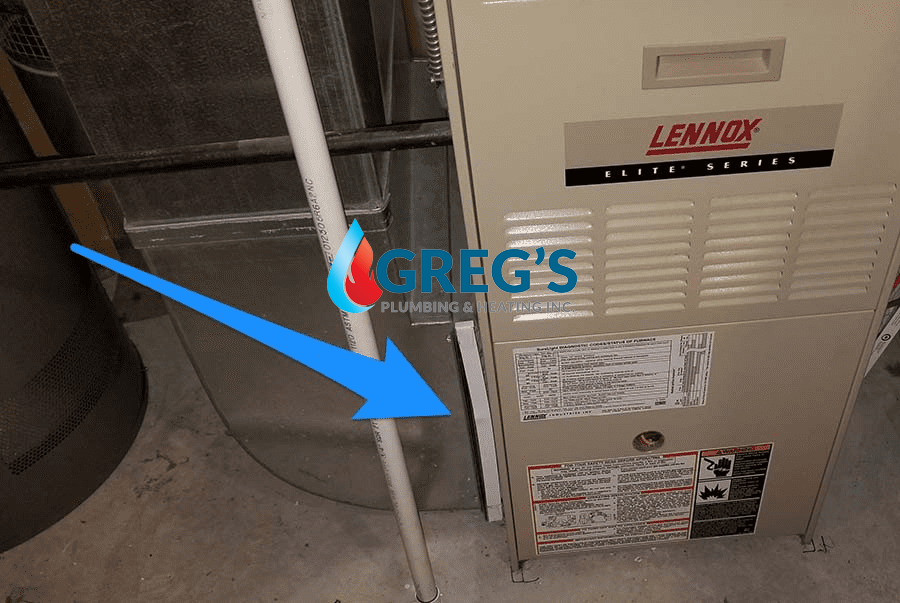
A dirty filter is one of the most common no heat issues in Hamilton, especially after renovation dust or a busy fall season.
Where to look:
- In a slot or tray between the furnace and the return duct
- In a filter rack beside the furnace
- Sometimes behind a return air grille in the hallway or basement
Pull the filter out and compare it to this quick guide:
| Filter condition | What it looks like | Possible furnace symptoms | What to do |
|---|---|---|---|
| Clean or lightly dusty | Light passes through easily | Normal heat, no strange noises | Reinstall and check again next month |
| Moderately dirty | Grey, dust layer but not caked | Furnace may run but cycle on and off more often | Replace soon, especially in heating season |
| Very dirty or caked | Dark, thick dust, almost no light passes | Furnace overheats, shuts down, may not start again | Replace immediately |
| Wrong size or bent | Gaps around edges, air bypassing filter | Dust in furnace, noisy airflow, comfort issues | Get correct size filter |
| Very high MERV in basic system | Restrictive, may whistle, airflow reduced | Furnace may lock out or show high limit faults | Ask a pro which filter rating your system can handle |
If you replace a badly clogged filter, turn the furnace off and back on at the switch to reset it. Give it a few minutes. If it still will not start, it may already be in a deeper lockout that needs a technician.
3.2 Make Sure Supply and Return Vents Are Open
In older Hamilton homes, it is very common for vents to be:
- Closed to “save heat” in spare rooms
- Covered with furniture, rugs or storage boxes
- Blocked by kids’ toys or pet beds
A furnace is designed to move a certain amount of air. If too many vents are closed or blocked:
- The furnace can get too hot and shut down on a safety limit
- You may get hot and cold spots and weak airflow
- You might hear whistling or feel strong pressure at the remaining open vents
Do a quick house walk:
- Open as many supply vents as possible, especially on the main floor and second floor.
- Make sure large furniture is not covering return air grilles.
- Check basement vents too, especially if you finished the basement after the furnace was installed.
If opening vents and changing the filter does not bring your furnace back, or if it quickly shuts off again, that is a sign the unit may be overheating or locking out. At that point, it is safer to have a licensed gas technician from Greg’s Plumbing & Heating look at it through our furnace repair service rather than continuing to reset it.
4. Condensate Trap and Float Switch: Small Water Problems, Big Headaches
If you have a high efficiency furnace (90%+ AFUE, usually with white PVC vent pipes), it creates condensate water as it runs. That water drains through a small plastic hose or a condensate pump. When something in that drain path plugs or backs up, your furnace can refuse to start.
4.1 What the Condensate Drain Looks Like
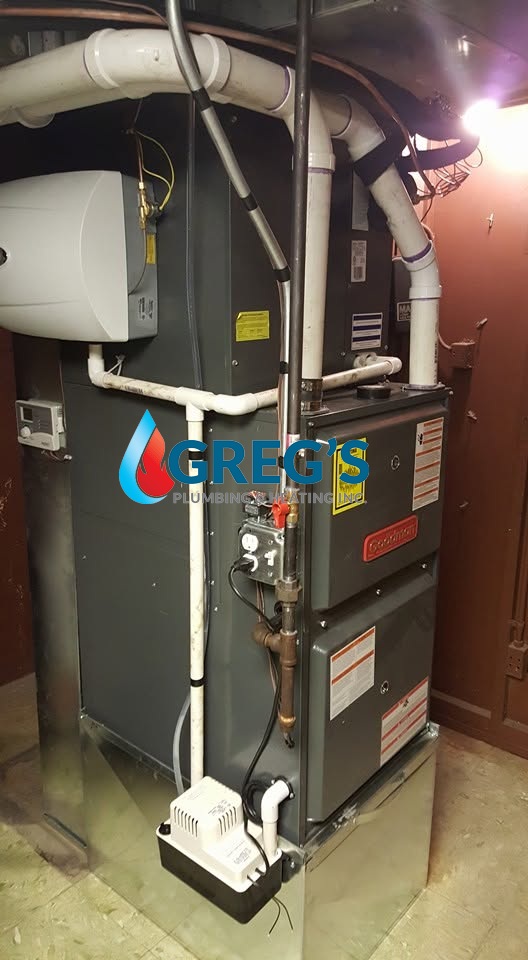
Look near the bottom of the furnace cabinet for:
- A small white or clear plastic hose coming off the furnace
- A U-shaped plastic trap or box on the side
- A little pump on the floor, with a clear plastic cover and one or two hoses
That tubing usually runs to a floor drain, laundry sink or a nearby drain pipe.
If this drain line is blocked, the furnace’s safety controls may prevent it from firing. That avoids water spilling inside the cabinet and damaging electrical parts.
4.2 Signs Your Condensate Drain is the Problem
Here are some common clues:
| What you notice | What it might mean | Safe homeowner action |
|---|---|---|
| Furnace tries to start, then shuts off | System may be hitting a condensate or pressure switch | Check for obvious kinks or sagging hoses |
| Water around the base of the furnace | Condensate line, trap or pump overflow | Gently dry area, look for a blocked drain path |
| Gurgling sounds near the furnace | Partially blocked condensate line | Look for visible clogs in clear sections |
| Condensate pump running constantly or buzzing | Pump struggling to move water | Make sure outlet hose is not kinked or frozen |
You can:
- Look for kinks, sags or obvious clogs in clear plastic sections
- Make sure any hose going to a drain is not submerged under water
- Confirm the condensate pump (if you have one) is plugged in and the outlet hose is not frozen or crushed
Do not open electrical panels, cut tubing or pour strong chemicals into the drain. Winnipeg style “bleach down the drain” tips you might find online can damage components or create fumes.
If you see standing water in the bottom of the furnace, or the pump looks like it has failed, it is time to book a visit. Our licensed techs handle condensate and drainage issues every week as part of heating and cooling repairs in Hamilton and can also make sure the rest of the system is safe.
5. Flame Sensor and Ignitor Basics: What Homeowners Can See
Two small parts inside your furnace cause a lot of “furnace will not turn on” and “no heat in Hamilton” calls:
- The ignitor (lights the gas)
- The flame sensor (proves the flame is actually burning)
You should not take these parts out yourself, but you can often spot their symptoms and explain them to your technician when you call for furnace repair in Hamilton.
5.1 Typical Ignition Sequence (What You Might Hear or See)
When a modern gas furnace starts properly, it usually follows this pattern:
- Thermostat calls for heat
- You hear a small fan or “whirring” sound (inducer motor)
- After a few seconds, you may see or hear the hot surface ignitor glow or click (if you have a spark ignitor)
- Gas valve opens and burners light with a soft “whoomph”
- After a short delay, the main blower comes on and warm air starts coming through vents
If your furnace stops somewhere in that sequence, it gives clues:
| What happens when heat is called | Likely stage of failure | Who should fix it |
|---|---|---|
| Nothing at all, no sound | Power, thermostat or board | Homeowner checks done, then pro |
| Small fan runs, but no glow / no flame | Ignitor or gas valve stage | Licensed gas tech only |
| Burners light for a few seconds then stop | Flame sensor not reading flame | Licensed gas tech only |
| Furnace cycles like this several times | Safety lockout likely | Turn off, call for service |
If you see burners light briefly and then shut off, do not keep resetting the furnace. Repeated failed ignition attempts are exactly what the safety systems are trying to prevent.
5.2 What a Flame Sensor Problem Looks Like (From the Outside)
A dirty or failing flame sensor might show up as:
- Furnace starts and blows warm air for only 10–30 seconds, then shuts down
- Multiple tries to ignite before stopping completely
- Red fault light flashing a specific pattern (we will cover fault codes in the next section)
- Furnace works fine right after a reset, then fails again later the same day
Homeowners sometimes read online that you can “just clean the flame sensor with sandpaper.” In reality:
- Aggressive cleaning can damage the protective coating
- You are still working near live gas and electrical components
- It is easy to bend or crack parts you cannot easily replace yourself
Instead of gambling on a DIY fix on a freezing Hamilton night, it is safer to have a licensed gas technician inspect and clean or replace the sensor properly. Our team handles this as part of everyday no heat calls, along with combustion checks and, when needed, gas pipe installation and adjustments to keep everything to code.
6. Reading Furnace Error Lights and Codes
Most modern furnaces in Hamilton have a small LED light on the main control board behind the blower door. When something goes wrong, that light often blinks in a pattern instead of staying solid. You do not need to take the furnace apart, but you can often see the light through a small plastic window or vent slot.
Tip: If you can safely see the light without removing panels, write down the blink pattern before you turn power off. It can save time on a service call.
6.1 Typical Light Patterns (Very General Guide)
Every brand is different, but there are some common themes:
| Light pattern (general) | What it often means (approximate) | Homeowner next step |
|---|---|---|
| Solid, steady light | Normal operation or idle | Good sign. Check thermostat and filter first. |
| Slow continuous blinking | Normal operation, calling for heat | System may be okay, look for other clues. |
| Fast continuous blinking | Board sees an error or lockout | Turn power off, wait a minute, turn back on once. |
| 2 flashes, pause, 2 flashes | Pressure or venting issue on many models | Check outdoor vent/intake for snow or blockage. |
| 3–4 flashes, pause | Ignition or flame-sense problems on many units | Stop resetting. Book a licensed gas technician. |
| 5+ flashes or alternating odd patterns | More serious or multiple faults | Turn off and schedule a same-day repair visit. |
| No light at all | No power or failed board | Check switch and breaker, then call if still dead. |
There is usually a sticker on the inside of the furnace door that explains your exact code meanings. If you are comfortable and it is safe, you can:
- Turn off power to the furnace at the switch.
- Remove the front blower door only to read the sticker.
- Put the door back on firmly so the safety switch closes.
- Turn power back on and watch the light through any available window.
Do not remove additional panels or start unplugging wires. That is where DIY quickly becomes unsafe.
6.2 When Error Codes Point to Venting or Gas Issues
Codes that relate to:
- Pressure switches
- Blocked vent / intake
- Flame failure / ignition fault
often mean the furnace is detecting a problem with combustion or venting. That can involve:
- Frozen or clogged outdoor vent pipes
- Damaged or incorrectly sloped exhaust
- Weak combustion air or undersized gas piping
These are not DIY items. They are exactly why using a licensed gas fitter matters. Greg’s Plumbing & Heating is certified for gas pipe installation and venting work and handles these issues as part of our furnace repair service.
If your code points to anything with “flame,” “pressure,” or “vent,” turn the system off and book a visit rather than repeatedly resetting it.
7. When to Stop and Call a Pro (Smells, Noises, Lockouts)
There is a big difference between a simple thermostat setting and a true no heat emergency. The goal of these checks is to help with obvious, safe issues. As soon as anything feels off, it is time to stop and call a licensed technician.
7.1 Smells That Mean “Turn it Off”
If any of these show up while your furnace is trying to run, do not keep experimenting:
- Gas odour (rotten egg smell)
- Leave the house, call Enbridge or 911 from outside, then contact a licensed gas fitter.
- Sharp electrical or burning plastic smell
- Turn off the furnace at the switch and breaker. Do not restart.
- Strong burning smell that does not clear after a few minutes on first start-up
- A light “dust burn” smell can be normal the first time you run the furnace each season.
- Anything strong, ongoing or smoky is a stop sign.
If in doubt, shut it down and call. It is always safer to have a professional from Greg’s Plumbing & Heating inspect the system than to hope a serious smell goes away on its own.
7.2 Noises That Should Not Be Ignored
Some noises are normal, like a gentle “whoomph” when burners light or low fan noise. Others are warning signs:
- Loud bangs or booms when the furnace starts
- High-pitched screeching from the blower or inducer motor
- Rattling or metal-on-metal grinding
- Continuous clicking without the furnace ever fully starting
These can point to delayed ignition, failing motors or loose components. All of them are reasons to shut the furnace off and book a same day heating repair rather than trying to run it through the night.
7.3 Repeated Lockouts and Hard Resets
If your furnace:
- Starts, stops, and then tries again several times
- Runs for a short time, then locks out and will not respond until you cut power
- Only works for a while after you flip the switch or breaker
the safety controls are telling you something is wrong.
A good rule for Hamilton homeowners:
After one careful reset (power off for a minute, then on), if the furnace still shuts down or shows the same fault, stop resetting it.
Multiple lockouts can:
- Stress electrical parts
- Allow unsafe conditions to continue
- Mask the original cause when a technician arrives
Instead, turn the switch off and book a visit through our heating and cooling repairs hub or by using the Book Online option on our site. Greg’s Plumbing & Heating offers same-day no heat response for many calls in Hamilton, Ancaster, Dundas, Stoney Creek, Binbrook and nearby areas.
8. Same Day Furnace Help Across Hamilton and Area
If you have worked through the checks above and your furnace still will not start, you are not on your own. Greg’s Plumbing & Heating runs no heat calls all winter across Hamilton and the surrounding communities.
Typical same day furnace calls we handle:
| Area | Common furnace issues we see |
|---|---|
| Central and East Hamilton | Older furnaces in brick homes, venting issues, old thermostats |
| Stoney Creek and Winona | High efficiency vent icing, condensate problems, filter lockouts |
| Ancaster and Dundas | Smart thermostat issues, zoning and airflow problems |
| Binbrook and Mountain | Newer high efficiency units, pressure switch and code faults |
| Grimsby and Caledonia | Rural vent terminations, outdoor intake blockages |
From our Hamilton base, we can often get to you the same day for genuine no heat emergencies. When you call, it helps to have a few details ready:
- What your thermostat is showing now
- Any error lights or codes you noticed on the furnace
- Strange smells or noises, if there were any
- What you have already tried from the checklist above
You can request help in three ways:
- Call 905 928 6831 for live dispatch
- Tap Book Online on the site to send a no heat request straight to our team
- Use the appointment form on our contact page
Behind the scenes, your call is handled by the same licensed gas fitters who do our heating and cooling repairs year round, not a generic call centre.
9. Ready for a Pro? Get Your Heat Back On Today
If your furnace still is not starting after the basic checks, or if anything in your gut feels unsafe, it is time to hand it over to a professional. A no heat call is exactly what our furnace repair service in Hamilton is built for.
When you book Greg’s Plumbing and Heating, you get:
- Licensed gas technicians who work on furnaces and gas piping every day
- Straightforward diagnosis of what is actually wrong, not a guess
- Options you can understand repair if it is safe and sensible, or replacement if that is the better long term choice
- Local experience with Hamilton winters, lake wind, and the real world way houses here are built
What we do on a typical no heat visit:
- Verify there are no gas leaks or dangerous venting issues
- Check power, controls and safety switches
- Test ignition, flame sensing and airflow
- Clean or adjust parts where appropriate
- Give you clear next steps and pricing before any bigger work
If you are sitting in a cold house in Hamilton, Ancaster, Dundas, Stoney Creek, Binbrook, Grimsby or Caledonia, you do not have to wait and hope the furnace restarts by itself.
- Call 905 928 6831 now, or
- Use Book Online to request a furnace repair visit and add a quick note that you have no heat
Greg’s Plumbing & Heating
69 Bigwin Rd Unit 1 Hamilton ON
905 928 6831
admin@gregsplumbing.ca
We will help you move from “furnace not starting” to warm air blowing again as quickly and safely as possible.
FAQ: Furnace not starting
1. Why is my furnace not starting in my Hamilton home?
If your furnace is not starting in Hamilton, the most common causes are simple ones: the furnace switch is off, the breaker has tripped, the thermostat is not set to heat, or the filter is badly clogged. High efficiency furnaces can also refuse to start if the outdoor vent or intake is blocked with snow or leaves. After you check those basics, if there is still no heat, it is safer to book a professional furnace repair visit instead of repeatedly resetting the unit.
2. What should I check before calling for a no heat furnace repair?
Before you call for a no heat emergency, you can safely check:
- Furnace power switch and breaker
- Thermostat mode set to HEAT, with batteries replaced if needed
- Filter condition and that your vents are open and not blocked
- Outdoor PVC intake and exhaust pipes for snow or debris
If you smell gas, see water around the furnace, or notice error lights flashing on the control board, skip the DIY and contact Greg’s Plumbing & Heating for same day furnace repair in Hamilton through our heating and cooling repairs hub.
3. Can a dirty filter really stop my furnace from turning on?
Yes. A severely dirty or restrictive filter can cause your furnace to overheat and shut down on a high limit safety. Some furnaces will try a few times and then lock out, which feels like the furnace will not turn on at all. If your filter is dark, caked, or you cannot see light through it, replace it right away, open your vents, and then restart the furnace once. If it continues to shut down, book furnace repair in Hamilton so a tech can check for deeper airflow or safety issues.
4. Is it safe to keep resetting my furnace when it will not start?
It is fine to try one careful reset after you check the basics. Turn the furnace off at the switch, wait a minute, and turn it back on. If the furnace keeps shutting down or shows the same error, do not keep resetting it. Repeated lockouts can hide the real problem and may be unsafe if there is a gas, venting or flame sensing issue. At that point, shut the switch off and call a licensed technician through our heating and cooling repairs page.
5. How do I know if my furnace problem is electrical or gas related?
Very simply:
- If nothing at all happens when you call for heat (no lights, no fan, no sound), the issue may be electrical, such as a bad breaker, switch, control board or thermostat wiring.
- If you hear the furnace try to start, see a brief flame, then it shuts down or tries several times, that is more likely a gas, ignition, flame sensing or venting problem.
You should not try to work on gas piping or ignition parts yourself. Greg’s Plumbing & Heating is licensed for both gas pipe installation and furnace repairs, so we can track down the root cause either way.
6. What do furnace error light flashes usually mean?
On most modern furnaces, a blinking LED light on the control board is a fault code. Slow flashing can be normal, fast flashing or repeated patterns often mean a problem. Common codes point to issues with pressure switches, blocked vents, ignition failure, or flame sensing. You can safely note the blink pattern and then turn the power off at the switch. When you book furnace repair in Hamilton, sharing that code helps your technician arrive better prepared.
7. When should I call a Hamilton furnace technician right away?
Call right away and turn the furnace off if you notice:
- Gas smell (rotten egg odour)
- Sharp electrical or burning smells that do not clear
- Loud bangs, screeching, or grinding noises
- Water pooling around the base of the furnace
- Repeated start and stop cycles with no heat
These are not minor comfort issues. They can involve safety controls, venting or gas supply. You can reach Greg’s Plumbing & Heating quickly from our contact page or by using the Book Online option for no heat calls.
8. Do you offer same day furnace repair in Hamilton and nearby areas?
Yes. Greg’s Plumbing & Heating offers same day furnace repair for genuine no heat calls across Hamilton, Ancaster, Dundas, Stoney Creek, Binbrook, Grimsby and Caledonia whenever possible. From our local shop at 69 Bigwin Rd Unit 1 Hamilton ON, our licensed gas technicians handle emergency calls throughout the heating season. You can call 905 928 6831 or request a visit through our furnace repair page or the contact and booking form.


