
Hamilton homeowners call us for “no hot water” more than almost any other issue—especially after a cold snap when inlet water temps drop and recovery slows. Before you book a visit, run through these quick, safe checks. Many fixes take two minutes and cost nothing. If anything here feels unsafe, stop and use Emergency Plumbing or our Water Heater Repairs page to book same-day help. We serve the entire Hamilton area.
TL;DR: No Hot Water
- Safety first: If breaker trips repeatedly or you smell gas, stop and call Emergency Plumbing.
- Power/gas: Verify the breaker is ON (electric) or the gas valve is open and the dial is ON, not Vacation.
- Reset: Press the red ECO reset under the upper panel on electric tanks.
- Pilot/igniter: Relight per the door label. If it will not stay lit, the thermocouple or igniter needs service.
- Whole home lukewarm: Likely a sticking mixing valve or failed dip tube, not the heater setting.
- One fixture only: Check aerators/shower cartridges for clogs or cross-mixing.
- Still cold? Use our Water Heater Repair-or-Replace Calculator, then Book Online or call 905-928-6831.
1) Safety First (breaker / gas shut-off)
Work safely and keep electricity and gas in mind before you touch the heater.
Electric tank — make it safe
- Stand dry on a dry floor; don’t touch the tank or panel with wet hands.
- Go to your electrical panel and locate the water heater breaker (usually 20–30A, double-pole).
- If the breaker is tripped, turn it fully OFF, then ON once.
- If it trips again immediately, stop. You likely have a failed element, thermostat, or wiring short—book a repair.
Tip (Hamilton basements): If the panel is in a damp utility room, run a fan for a few minutes first. Condensation and cold concrete floors make accidental slips more likely.
Gas tank (natural gas) — make it safe
- Look for gas odour. If you smell gas, don’t relight anything. Leave the area and call your utility and then us.
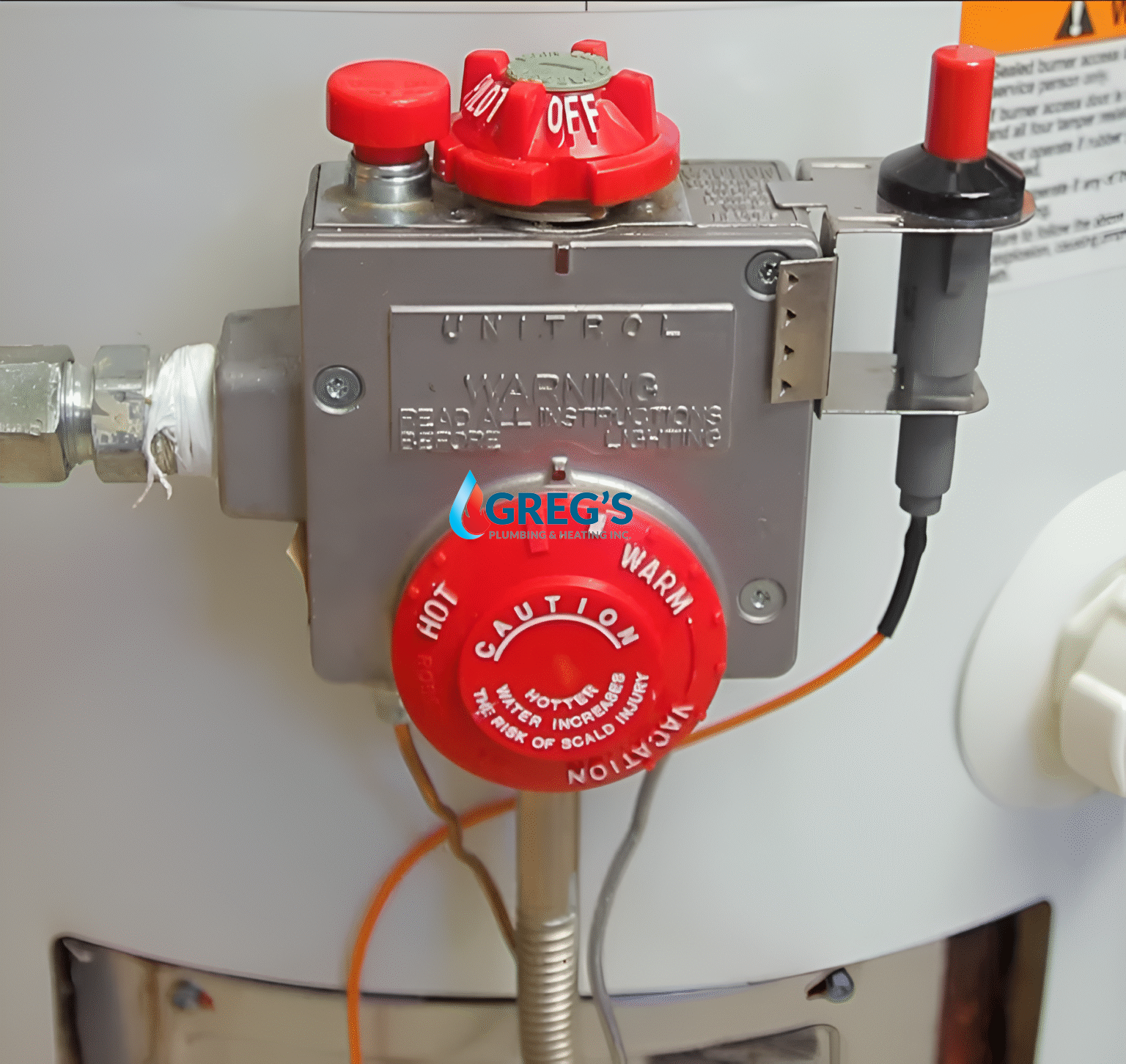
- Find the manual gas shut-off on the rigid gas pipe before the heater’s gas valve. Make sure it’s parallel to the pipe (open). Perpendicular means closed.
- Check the water heater’s gas valve control knob (usually OFF / PILOT / ON). If it’s in OFF, you’ll have no hot water until relit (see Section 3 in the full guide).
- If you recently had power or gas service work, confirm any appliance shut-off wasn’t left closed.
Tankless (gas) safety note: If the unit powers up but shows errors, do not cycle it repeatedly; you can flood the burner with unlit gas. Move to the checks below.
When to stop and call
- Breaker won’t reset, or there’s a burnt smell at the tank.
- You smell gas or hear a hiss near the heater.
- There’s standing water around the base of the tank.
Same-day help: Water Heater Repairs • Emergency Plumbing
2) Verify Power/Gas and Thermostat Settings
A surprising number of “no hot water” calls come down to a control left low or a switch that was bumped during cleaning or renovations.
Electric tank — power & thermostats
- Service switch: Some homes have a wall switch near the tank. Make sure it’s ON.
- Breaker: Confirm the dedicated breaker is ON (see Section 1).
- High-limit reset (ECO):
- Turn breaker OFF.
- Remove the upper access panel on the tank (Phillips screws), fold back the insulation, and push the red reset button on the upper thermostat.
- Replace insulation/panel and turn the breaker ON.
If hot water returns, monitor. A recurring trip points to a failing thermostat or element—plan a service call.
- Thermostat setting: Upper and lower thermostats are often set too low after maintenance. A practical range is 49–54 °C at the tank. If you adjust, cut power first and move each thermostat in small increments.
Scald-safety note: Ontario fixtures are typically tempered down to ~49 °C by a mixing valve. Don’t exceed 54 °C at the tank unless advised; higher temps raise scald risk.
Gas tank — control dial & gas supply
- Gas control dial: Ensure it’s ON (not PILOT/VACATION) and set to HOT or a mid-setting. Vacation mode gives warm—not hot—water.
- Pilot/ignition status: Modern heaters use spark ignition; older models have a standing pilot. If there’s no status light or you see instructions for lighting on the door, the pilot may be out (details in Section 3 of the full guide).
- Gas supply: Confirm the appliance gas cock is open (handle inline with pipe). After utility work or appliance moves, it’s common for this to be left closed.
- Combustion air: Ensure the burner compartment isn’t blocked by storage. Tight utility closets in Hamilton semis often starve the burner and cause lockouts.
Tankless (gas) — quick power/gas checks
- Power: Verify the unit’s power switch and nearby GFCI outlet are ON. Tripped GFCIs are common after damp weather.
- Gas valve: Inline with pipe = open.
- Thermostat: Set the controller to 49–54 °C.
- Condensate & intake: A blocked condensate line or iced intake/exhaust will trigger errors and cold water.
Handy reference: common “no hot water” control causes
| System | Likely cause | Quick check |
|---|---|---|
| Electric tank | Tripped breaker or ECO reset | Panel breaker / red reset button under upper panel |
| Gas tank | Control dial on VACATION or OFF | Set to ON and mid-HOT; verify status light |
| Gas tank | Pilot out / ignition lockout | Check viewing window for flame/status; relight per door label |
| Tankless | Tripped GFCI / power off | Test/reset GFCI; confirm unit switch is ON |
| Any | Gas valve closed | Handle parallel to pipe = open |
If these checks don’t restore hot water, jump to Water Heater Repairs to book a visit, or continue to the next sections of the guide for pilot/igniter steps, ECO resets & error codes, and when to repair vs replace.
3) Pilot Light / Igniter Steps (Gas Tanks)
A pilot that’s out—or an ignition lockout—will leave you with cold water. Work slowly and follow the lighting label on your heater’s front panel.
Before you relight
- No gas odour: If you smell gas, don’t relight. Leave and call your utility, then us.
- Clear the area: Move boxes and cleaners away from the burner door so the heater gets air.
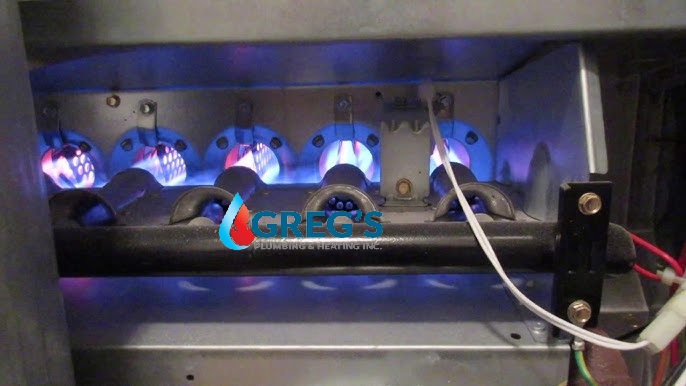
- View window check: Most modern FVIR heaters have a small glass window. You should see a small steady blue flame when lit.
Relighting a standing-pilot model
- Turn the gas control knob to OFF and wait 5 minutes. This clears unburnt gas.
- Turn the knob to PILOT. Press and hold the pilot button while clicking the piezo igniter a few times.
- Keep holding the pilot button for 30–60 seconds after the flame appears.
- Release the button. If the flame stays, turn the knob to ON and set temperature to HOT (mid).
- If the pilot won’t stay lit, the thermocouple/thermopile may be weak or the air intake clogged—book a repair.
Relighting an electronic-ignition model
- Set the control to PILOT/IGNITE (or follow the sequence printed on the label).
- Press and hold the ignite button until the status light blinks the “pilot lit” pattern.
- Turn to ON and set temperature.
- If the control shows a blinking fault, go to Section 4 (error codes).
Tankless tip: If your controller shows “no flame” or “ignition failure,” don’t repeatedly reset. Check that the gas valve is fully open and the intake/exhaust outside isn’t blocked by frost. Then read Section 4.
If relighting fails twice, don’t keep trying—excess attempts can flood the chamber with gas. Use Water Heater Repairs for same-day service in Hamilton.
4) Check the ECO Reset / Status Light / Error Codes
“ECO” is the high-limit safety that trips if water overheats. Status lights and error codes also point to simple fixes you can act on.
Electric tank — ECO & elements
- ECO reset: Power OFF at the breaker. Remove the upper access panel, fold back insulation, and press the red reset on the upper thermostat. Restore power.
- If it trips again, an element or thermostat may be faulty. Short draws of hot water followed by cold often mean the upper element has failed. That’s a repair call.
Gas tank — status light patterns (generic)
Your control’s LED will blink a pattern. Common meanings (consult your label for exact codes):
| Blink pattern (typical) | Meaning | What to try |
|---|---|---|
| Steady slow blink | Normal/Standby | Wait for a full heat cycle. |
| 1 every 3 sec + long pause | Ignition fail / pilot out | Follow Section 3 to relight; ensure gas valve is open. |
| 2 blinks | Thermopile/thermocouple weak | Pilot lights but goes out—needs service. |
| 4–5 blinks | Overheat / high limit | Turn dial to LOW, let cool 15–30 min, ensure air intake is clear. If it repeats, call. |
| Rapid continuous | Lockout | Power cycle once; if it returns, book a repair. |
Tankless (gas) — high-level code clues (brand-agnostic)
- Ignition/Flame loss (e.g., 10/11/12): Check gas valve open, good gas supply, and clear intake/exhaust.
- Overheat/Hi-limit (e.g., 14): Scale or low flow; try descale mode if equipped and clean inlet screen.
- Condensate/Drain (e.g., 29): Ensure the condensate tube slopes to a drain and isn’t frozen.
- Fan/Combustion air (e.g., 61): Clear snow/ice at the vent and intake.
If your code persists after a single power reset and the checks above, it’s time to schedule a visit: Water Heater Repairs or Emergency Plumbing.
5) Sediment & Dip Tube Clues
Hamilton’s water can leave sediment in tanks—especially if the heater hasn’t been flushed. Another culprit for lukewarm water is a failed dip tube (the plastic tube that sends cold water to the bottom of the tank).
What sediment feels and sounds like
- Rumbling or popping during a heat cycle.
- Hot for a minute, then cold, especially with older tanks—elements or burners heat a “blanket” of sediment, not water.
- Cloudy water at the hot tap that clears as air rises.
Quick homeowner check: Turn the thermostat to VACATION/LOW. Open the drain valve at the bottom of the tank with a hose into a bucket for 10–15 seconds. If the water spits or shows gritty material, you’ve got sediment. Shut the valve and return settings. A proper flush and service usually restores performance; severe buildup may shorten heater life.
Dip tube failure symptoms
- Short bursts of hot followed by long lukewarm draws, even with the thermostat set correctly.
- Plastic flakes or white shards in aerators or at the drain screen.
- Uneven temps at different taps.
Why it matters: A broken dip tube dumps incoming cold at the top of the tank, mixing with hot and delivering lukewarm water. Replacement is straightforward for a pro and much cheaper than a new tank—if the heater is otherwise healthy.
Is it sediment, dip tube, or a mixing valve?
Many Ontario homes have a tempering (mixing) valve near the tank outlet.
| Symptom | Likely cause | Next move |
|---|---|---|
| Rumbling/popping during heat; gritty drain water | Sediment | Book a flush and check anode; consider annual maintenance. |
| Short hot burst then lukewarm for rest of shower | Dip tube | Inspect/replace dip tube; clean aerators/screens. |
| Housewide lukewarm despite tank set to HOT; fluctuates when other taps open | Mixing valve | Valve may be sticking or mis-set; test and recalibrate/replace. |
When in doubt, we can diagnose quickly and advise repair vs replace based on age and efficiency. Continue to the next sections for mixing valve issues, plumbing restrictions, and the repair vs replace table, or book same-day help on our Water Heater Repairs page. We cover all of Hamilton and nearby communities.
6) Mixing Valve Issues (Tempering/Anti-Scald)
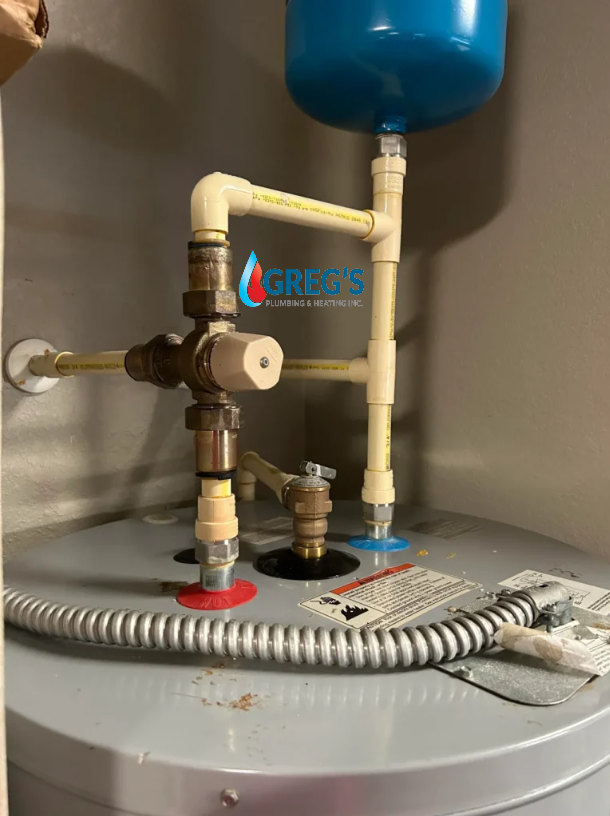
Most Hamilton homes have a tempering/mixing valve mounted on the hot outlet of the tank. It blends hot and cold to deliver safer ~49 °C water to your fixtures. When it sticks or drifts, you’ll get “no hot water” even if the tank itself is fine.
What a mixing valve does
Inside is a thermostatic element and shuttle. As outlet temperature changes, it slides to blend more or less cold. Minerals and age make the shuttle sticky.
Signs the mixing valve is the culprit
- House-wide lukewarm water even though the tank feels hot to the touch near the top.
- Temps swing when another tap or the toilet runs.
- Good hot at the tank’s drain, but lukewarm at faucets.
- Handle on the valve hasn’t been touched, yet output changed after maintenance or a cold snap.
Safe homeowner checks (quick)
- Feel the tank: top third warm/hot? Good.
- Check near-tank tee: the hot line leaving the tank should be hotter than the mixed line after the valve. If hot before/tepid after, the mixer is suspect.
- Clean aerators and shower screens; debris can mimic mixer issues.
- Adjust slightly: some valves have a small cap/knob. Nudge clockwise a few degrees. Wait 60–90 seconds and test.
- If output won’t rise or surges, the valve is sticking—time to service or replace.
Safety: Do not remove the valve or “hard-bypass” to full tank temperature; scald risk is real. We can rebuild or replace the valve and re-balance to 49–50 °C.
Need help today? Book Water Heater Repairs or use Emergency Plumbing after hours. We cover all of Hamilton.
7) When It’s a Plumbing Restriction (Not the Heater)
Sometimes the heater is hot and healthy, but flow is restricted or cold is cross-feeding the hot line.
Quick diagnostics you can do
- Single fixture cold/lukewarm? Unscrew the aerator and flush. Mineral grit from city work or a failing dip tube often clogs screens.
- Single-handle showers that never get truly hot: the cartridge may be blending cold through a worn seal. Try another shower/tap to compare.
- Whole-home low hot-only flow: check the hot shut-off above the tank and any ball valves; a bumped handle at 45° will throttle flow.
- Tankless only: clean the cold-inlet strainer (small screen at the bottom). Many “no hot” tankless calls are just a clogged screen.
- Winter symptom: kitchen or vanity on an exterior wall goes lukewarm = possible partial freeze on the cold feed or mixed outlet. Open cabinet doors and test adjacent fixtures.
Symptom-to-cause cheat sheet
| Symptom at taps | Likely cause | Fast check |
|---|---|---|
| One sink/shower weak & lukewarm | Clogged aerator / shower screen | Remove/clean screen; test with screen off. |
| One shower won’t go hot; others OK | Worn mixing cartridge | Set other shower hot to compare; replace cartridge. |
| Hot fine at tub, poor at vanities | 3/8″ stops or kinked supplies | Open stops fully; inspect flex lines for kinks. |
| Whole home tepid; tank top is hot | Stuck tempering valve | See Section 6; hot before valve, lukewarm after. |
| Tankless errors + low flow | Inlet screen/scale | Clean screen; descaling may be needed. |
| Cold snap + cabinet on outside wall | Partial freeze | Open doors; pencil-thin drip overnight; see our frozen-pipe guide. |
If flow or temperature returns after these checks, the heater likely isn’t the problem. If not, book a diagnostic—we’ll confirm with temperature and pressure tests and fix it same-day.
8) When to Repair vs Replace (Age & Efficiency)
A smart call weighs age, condition, efficiency, and repair cost. Use the guide below, then run our calculator and we’ll price both options.
Rule-of-thumb table (Hamilton homes)
| Heater type | Typical lifespan | “Usually Repair” | “Consider Replace” | Notes |
|---|---|---|---|---|
| Electric tank | 10–12 yrs | < 7 yrs, single element/thermostat, minor wiring | ≥ 9–10 yrs, tank leaks, repeated ECO trips | New UEF models are modestly more efficient; off-peak hydro plans can help. |
| Gas tank | 8–12 yrs | < 8 yrs, pilot/igniter, gas valve, anode service | ≥ 9–10 yrs, rust at base, burner chamber corrosion | Hard water + no flush shortens life; anode + flush extend it. |
| Power-vent tank | 8–12 yrs | < 8 yrs, pressure switch/inducer | ≥ 9 yrs, tank seep, venting failures + age | Parts are pricier; weigh cost vs age. |
| Gas tankless | 15–20 yrs | < 12 yrs, sensor/fan/igniter, descale | ≥ 15 yrs, heat-exchanger leak, repeated overheat codes | Annual descaling keeps efficiency high; great for endless hot water. |
Efficiency & payback snapshot
| Option | Efficiency (UEF) | What you’ll notice | Good fit |
|---|---|---|---|
| New gas tank | ~0.60–0.64 | Faster recovery vs old, similar bills | Families wanting simple, low upfront |
| Power-vent gas tank | ~0.67 | Flexible venting, decent recovery | Homes needing long vent runs |
| Electric tank | ~0.90–0.93 | Quiet, simple; slower recovery | Smaller households, off-peak hydro |
| Gas tankless | ~0.81–0.95 (condensing high) | Endless hot water, compact | Long-term owners with medium-high usage |
How we advise Hamilton homeowners
- If the unit is young and the tank is sound, a targeted repair (element, gas valve, igniter, mixer) is cost-effective.
- If the tank shows corrosion, leaks, or is past the lifespan window, replacing prevents a “Friday night flood” and lowers nuisance calls. Learn more by reading Water Heater Leaking in Hamilton: What It Means and What to Do Next
- If you’re finishing a basement or growing the household, consider capacity or tankless now to avoid a second project later.
Next step: Try our Water Heater Repair-or-Replace Calculator (embedded below on the page). It factors age, symptoms, parts cost, and your usage to suggest the smarter spend—then you can Book Online or call 905-928-6831.
9) Get Hot Water Back Today: Same-Day Service + Repair-or-Replace Calculator
If the checks above didn’t restore hot water—or your tank is older—run our quick calculator. It weighs age, symptoms, parts cost, efficiency, and usage to recommend repair vs replace for Hamilton homes.
Book now: 905-928-6831 • Book Online
Helpful links: Water Heater Repairs • Emergency Plumbing • Hamilton Plumbers
FAQs: No hot water in Hamilton ?
Why did my hot water stop suddenly?
Common causes in Hamilton homes: tripped breaker or ECO reset (electric), pilot out/ignition lockout (gas), or the control left on Vacation. Start with power/gas and the red ECO reset, then relight the pilot per the door label. If it trips again, book Water Heater Repairs.
How do I relight a gas water heater pilot safely?
Follow the lighting instructions on the heater door: set to OFF 5 minutes, then PILOT, hold the button, click igniter, keep holding 30–60s, then ON. If you smell gas or the pilot won’t stay, stop and call Emergency Plumbing.
Electric heater: power is on but water is cold—now what?
Turn the breaker OFF, open the upper access panel, press the red ECO reset, reassemble, breaker ON. If hot water returns but trips again, you likely have a failed element or thermostat and need service.
Why is my water only lukewarm at all taps?
That often points to a sticking mixing (tempering) valve at the tank outlet—or a failed dip tube mixing cold at the top of the tank. We can test, recalibrate, or replace the valve and inspect the dip tube the same day.
One shower won’t get hot but other taps are fine—heater or plumbing?
Likely a worn shower cartridge or a clogged aerator/screen, not the heater. Clean the screen and compare a second shower. If only one fixture is affected, it’s a local restriction, not a tank issue.
How long should my water heater take to recover?
Typical 40–50 gal tanks need 30–60 minutes for a full reheat; recovery is slower with sediment or low gas supply, and faster on power-vent models. Tankless units recover instantly but will fault if intake/exhaust or inlet screens are blocked.
Should I repair or replace my water heater?
Rule of thumb: repair when units are younger (electric <7 yrs; gas <8 yrs) and the tank is sound. Replace around 9–12 years or if there’s corrosion/leaks. Use our Repair-or-Replace Calculator, then Book Online. We serve all of Hamilton.


