Commercial Grease Trap Cleaning & Interceptor Service Hamilton
Hamilton’s Sewer Use Bylaw 14-090 requires every food service business to install and maintain a grease interceptor. Greg’s Plumbing keeps your trap clean, your kitchen running, and your business on the right side of the City’s enforcement unit.
Grease Trap Services We Provide in Hamilton
Whether you need a first-time installation, a long-overdue clean-out, or an emergency call because a drain has stopped moving, one call gets you a licensed plumber, not a subcontractor.
Grease Trap and Interceptor Cleaning
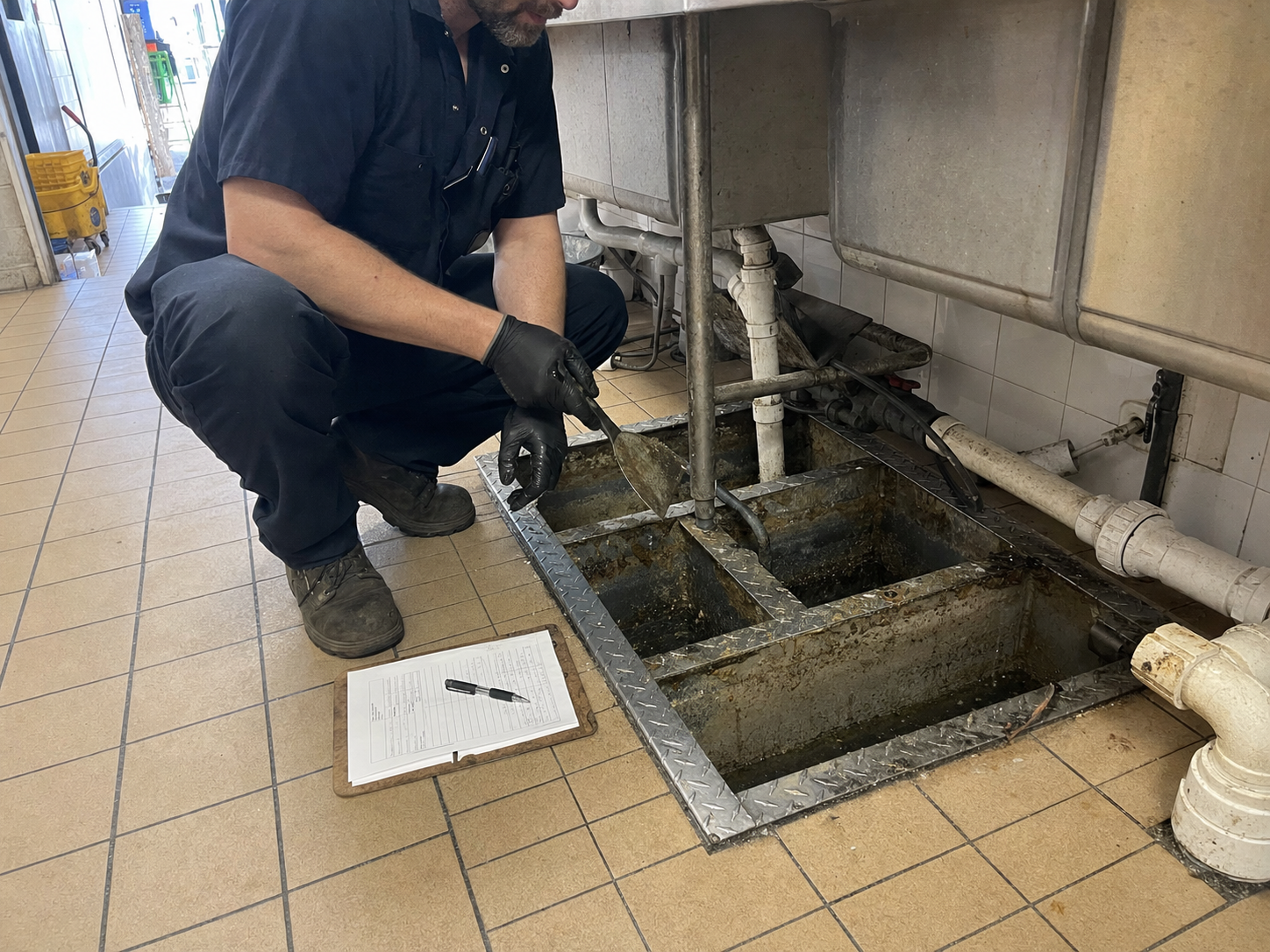
Hamilton Bylaw 14-090 requires pump-out before grease and solids reach 25% of the unit’s liquid volume. Most commercial kitchens hit that threshold faster than they expect. We clean the unit, record the date and volume removed, and give you the maintenance log your inspector will ask for. All waste is removed by a licensed hauler holding an Environmental Compliance Approval under Ontario Regulation 347.
Grease Interceptor Installation
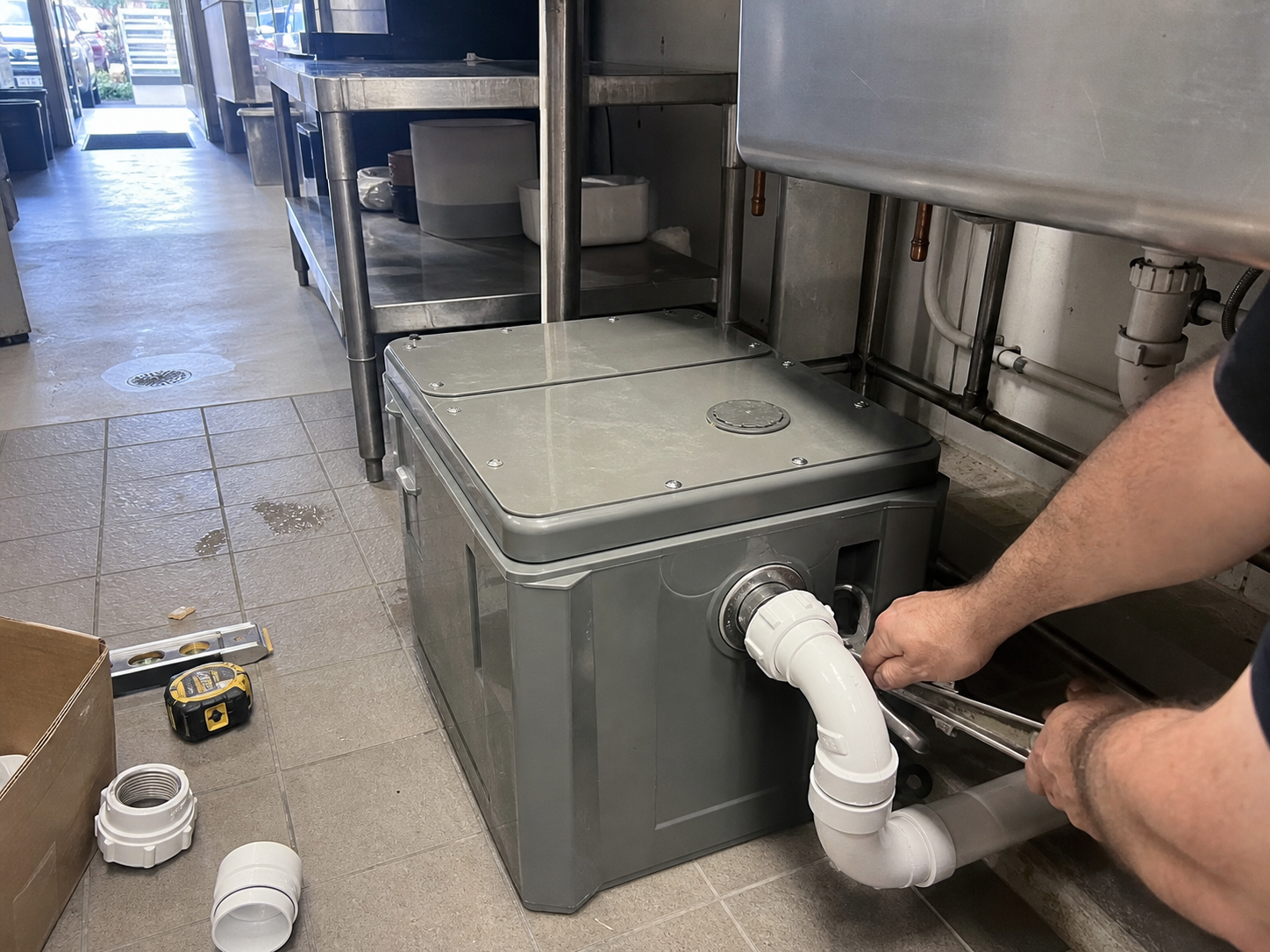
If your building does not have an interceptor, or the existing unit does not meet current ASME A112.14.3-2022 and CSA B481 standards, we handle the full installation — sizing, permits, and inspection sign-off. We work in active commercial kitchens and know how to schedule installation to minimize downtime for your operation.
Emergency Grease Drain Service
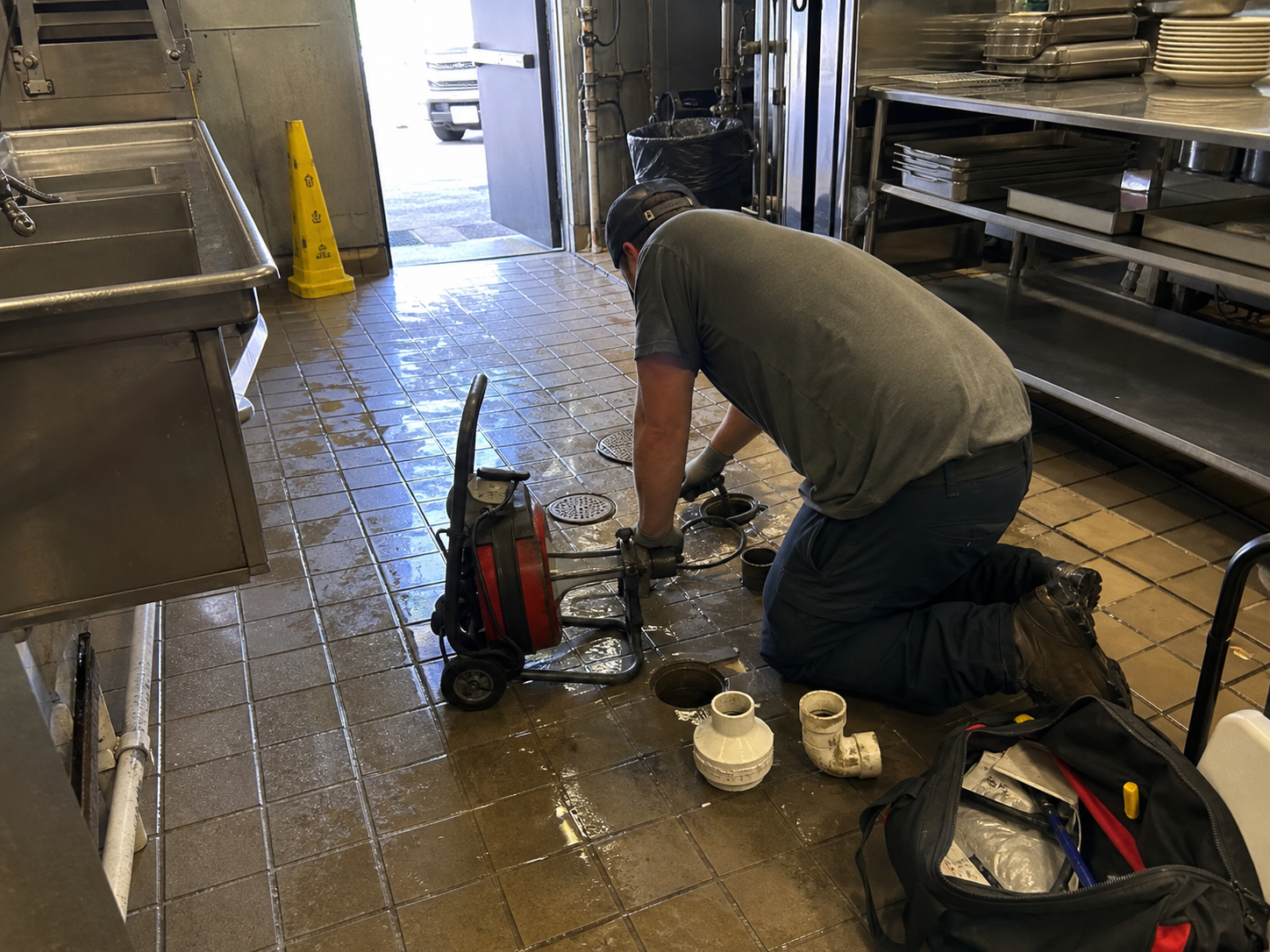
A backed-up kitchen drain is a health code problem, not just a plumbing problem. We respond to commercial drain emergencies across Hamilton including the Bayfront and North End industrial area, Stoney Creek Business Park, Ancaster Business Park, and Flamborough — and we carry parts for the most common commercial interceptor brands on every truck.
Inspection and Compliance Reporting
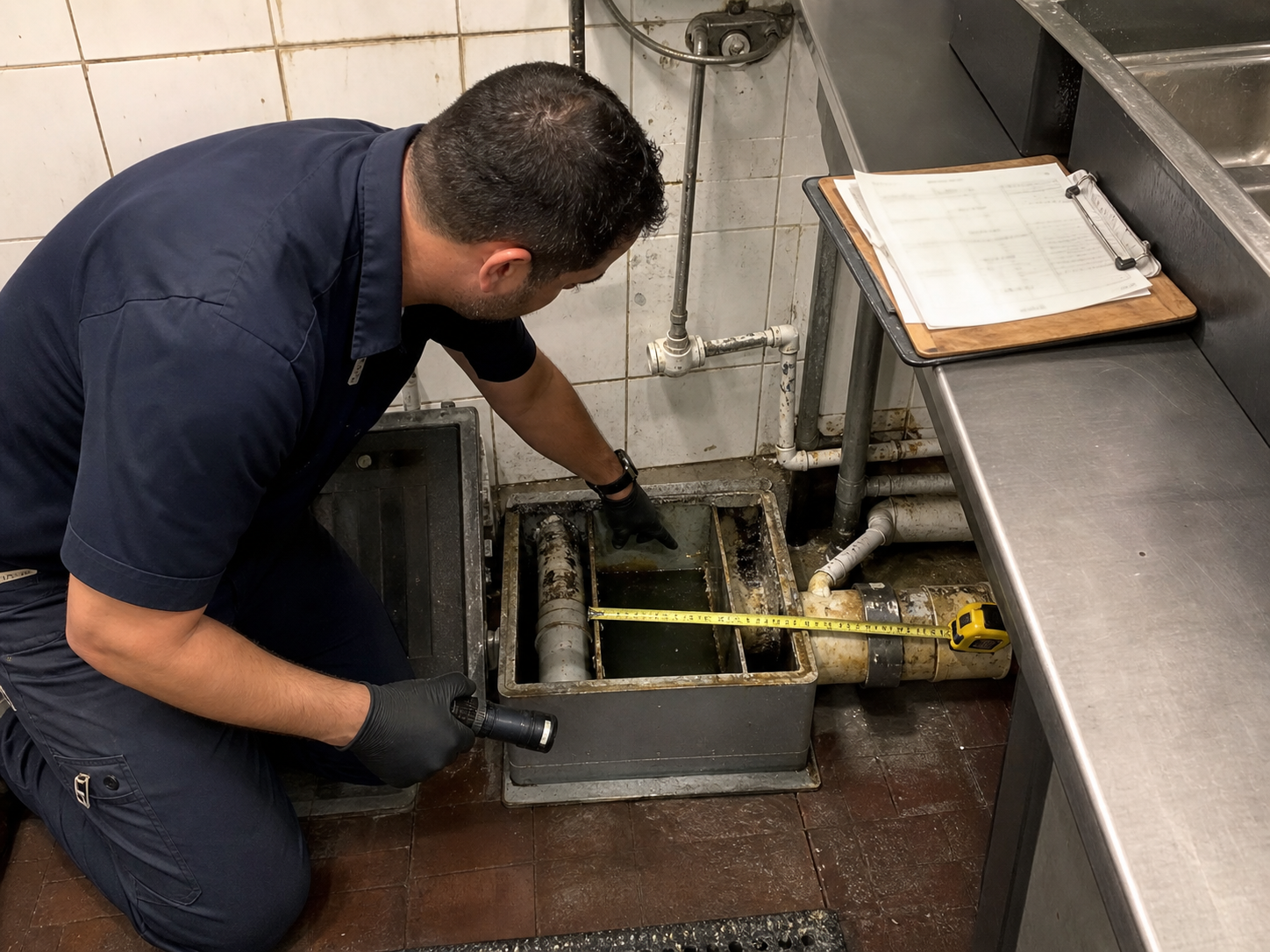
Not sure where your trap stands before a City inspection? We assess the unit’s condition, measure current grease and solids levels, check that the interceptor is correctly sized for your fixture flow rate, and provide a written compliance report you can keep on file.
Hamilton Businesses That Need a Grease Trap Plumber
Every commercial kitchen in Hamilton that connects to the City’s sanitary sewer is subject to Bylaw 14-090, and the City’s Environmental Monitoring and Enforcement unit does inspect.
Restaurants and Diners
Full-service kitchens generate the heaviest FOG loads. We service traps at restaurants across Hamilton — from Ottawa Street and Locke Street to the Mountain and the East End.
Banquet Halls and Caterers
High-volume cooking events create irregular but intense grease loads. We schedule service around your event calendar so you are never caught short before an inspection.
Bakeries and Coffee Shops
Butter, cream, and pastry fats accumulate quickly in undersized traps. We assess your unit’s capacity relative to your actual flow rate and flag problems before the City does.
Grocery Stores with Food Counters
Deli counters, hot food stations, and in-store bakeries all fall under the bylaw. We handle multi-unit locations and coordinate service across your store’s plumbing stack.
Institutions with Commercial Kitchens
Schools, hospitals, long-term care facilities, and places of worship with industrial kitchens are specifically named under Ontario’s FOG rules. We understand institutional procurement and paperwork requirements.
Food Plazas and Multi-Tenant Buildings
Property managers overseeing plazas with multiple food tenants need a single point of contact who knows the City’s shared-interceptor rules. We work with landlords and tenants together.
Grease Trap Maintenance Plans for Hamilton Food Service Businesses
A one-time clean-out solves today’s problem. A maintenance plan keeps you compliant all year without having to remember to call.
Scheduled Service Reminders
We contact you before your next service is due — based on your kitchen’s actual volume and trap capacity, not a generic calendar. No guessing, no last-minute calls.
No Paperwork Chased
We keep your service history on file. If the City contacts you or a tenant needs documentation for a lease renewal or insurance review, we can pull your records the same day.
Certified Waste Disposal Included
Every pump-out is handled by a licensed hauler certified under Ontario Regulation 347. We coordinate disposal on your behalf and include confirmation in your service record.
Multi-Location Coordination
One account covers all your Hamilton-area sites. We schedule service across multiple locations and deliver a single set of records for the whole portfolio.
Priority Response for Contract Clients
Maintenance plan clients move to the front of the line for emergency drain calls. If your kitchen backs up mid-service, you are not treated as a new call — you are an existing account.
Written Compliance Records
You receive a signed maintenance log showing service date, technician name, grease and solids levels before pump-out, and waste volume removed.
What Hamilton’s Sewer Use Bylaw Actually Requires From Your Business
Most business owners know they need a grease trap. Fewer know exactly what the City can enforce and what triggers an inspection.
The 25% Rule
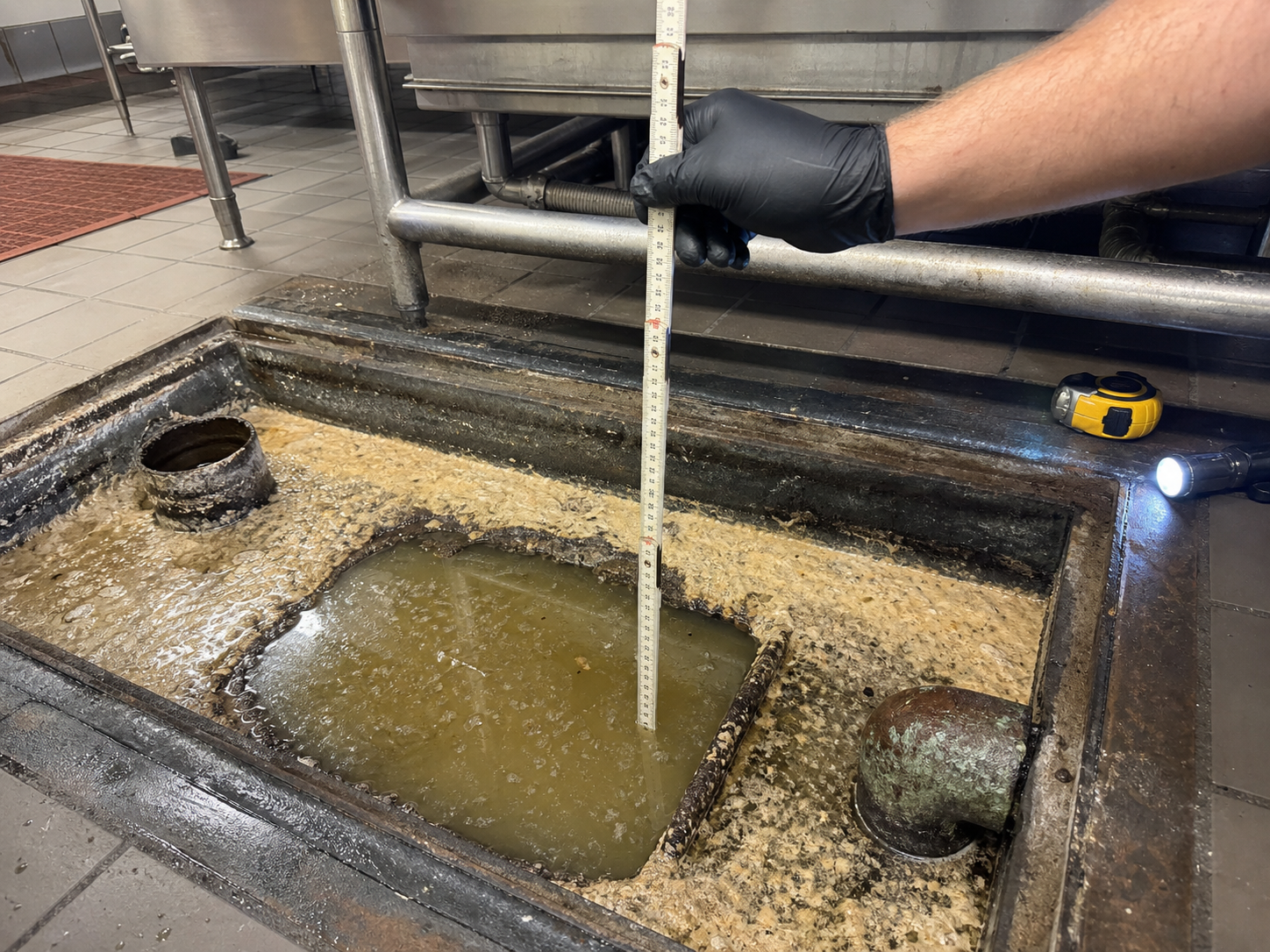
Hamilton Sewer Use Bylaw 14-090 requires that your grease interceptor be pumped out before grease and solids accumulate to 25% of the unit’s total liquid volume. There is no fixed monthly or quarterly schedule set by the City — the trigger is capacity-based. In a busy commercial kitchen, a standard indoor trap can reach that threshold in four to eight weeks. A large outdoor interceptor at a high-volume restaurant may get there faster than the owner expects. The only way to know where you stand is to open the unit and measure.
Who Enforces It and What They Check
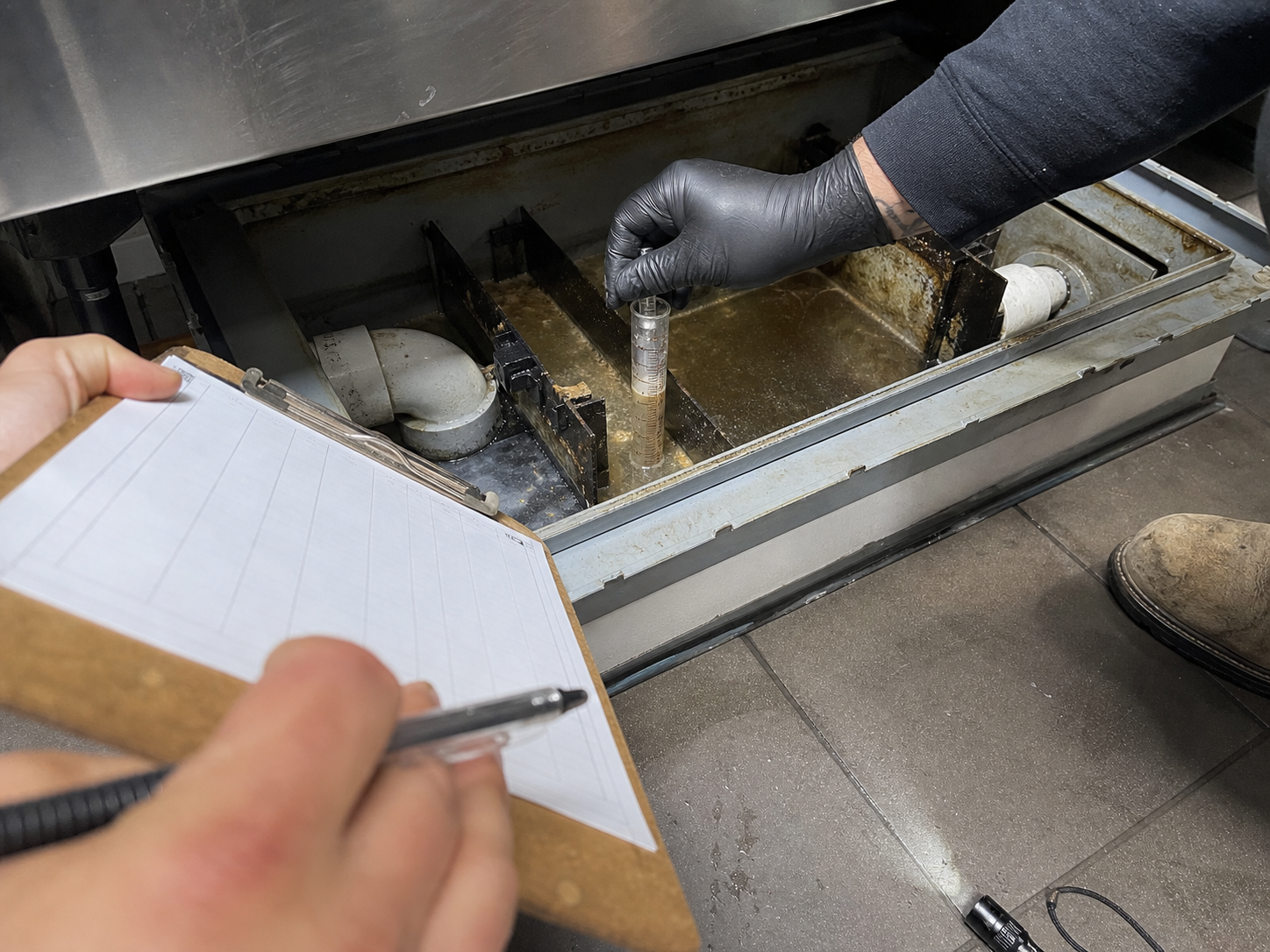
The City’s Environmental Monitoring and Enforcement unit collects samples from commercial and industrial facilities that discharge to Hamilton’s sewage works. When an officer visits, they are checking whether a compliant interceptor is installed, whether it is correctly sized for your fixture flow rate, whether the unit meets the ASME A112.14.3-2022 and CSA B481 equipment standards, and whether you have maintenance records on file showing dated pump-outs and the volume of waste removed. A verbal assurance that you had it cleaned “a few months ago” is not a record. A written log signed by the service technician is.
What Non-Compliance Can Cost You
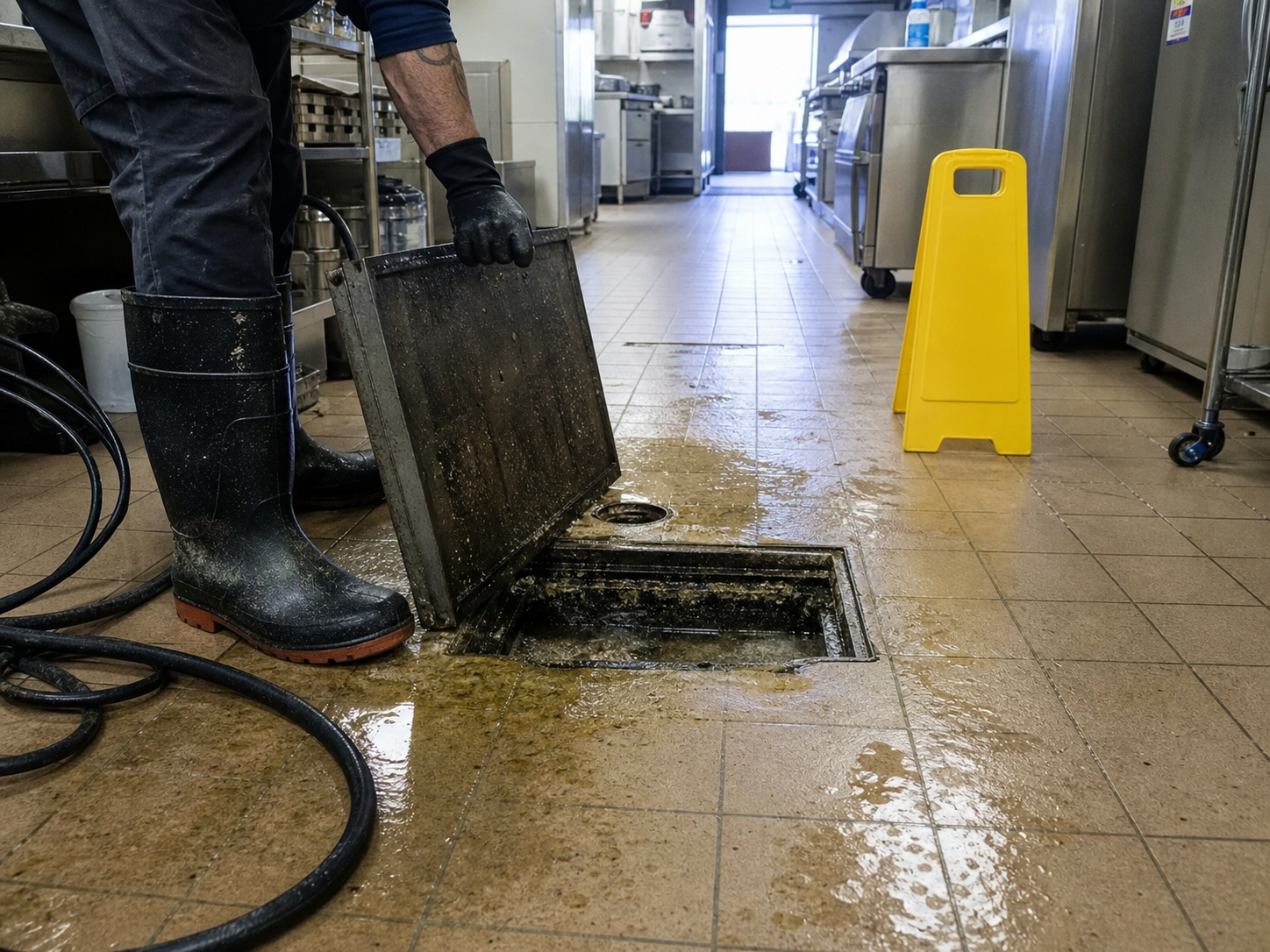
Operating without a functioning interceptor, allowing a unit to exceed the 25% threshold, or using unlicensed waste haulers who are not certified under Ontario’s Environmental Protection Act (O. Reg. 347) can all result in bylaw violation notices, mandatory corrective orders, and in serious cases, forced closure by Hamilton Public Health. The cost of a clean-out on schedule is a fraction of the cost of an enforcement action, a backup into a neighbouring property, or a temporary closure during your busiest service period.
Why Hamilton Food Service Businesses Choose Greg’s for Grease Trap Service