
Quick answer
Most kitchen sink clogs are grease and food buildup in the trap or the short pipe run that serves the kitchen. If only the kitchen is affected, it’s usually a local clog. If multiple drains are slow, you hear gurgling, or you smell sewage, treat it like a main drain warning and stop running water.
We see this across our service area, from Hamilton to Burlington and Stoney Creek. Kitchen lines clog more often because they deal with grease, soap, and small food bits every day.
First, confirm what kind of clog this is
Before trying fixes, do two quick checks. They tell you whether you’re dealing with a simple kitchen clog or something bigger.
One fixture or the whole house
Test 1: Check a bathroom sink or tub.
Run water for 10 to 15 seconds.
- If the bathroom drains normally, the clog is likely just in the kitchen line.
- If the bathroom is slow too, you may be looking at a main drain or venting issue.
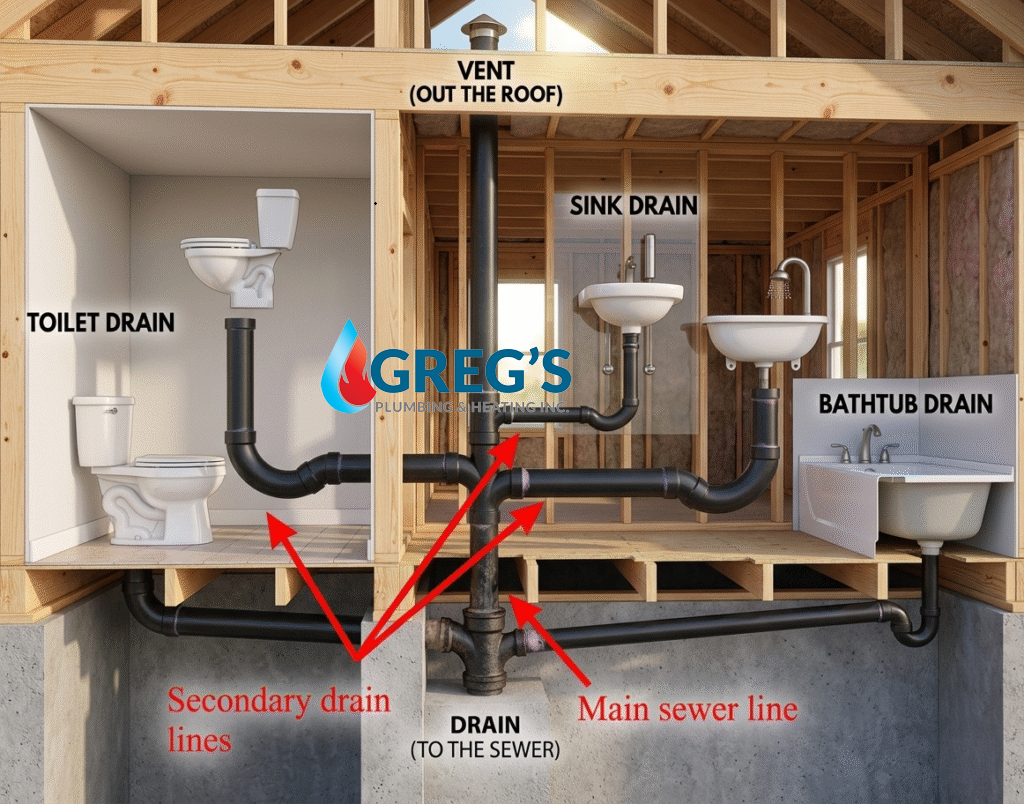
Test 2: Flush a toilet once.
Watch and listen.
- If the toilet flushes normally and doesn’t gurgle, that supports a local kitchen clog.
- If the toilet bubbles, gurgles, or flushes sluggishly, stop adding water to the system.
If more than one drain is acting up, it may be more than a kitchen clog. Use our Hamilton sewer backup checklist if you’re seeing warning signs. Sewer Backup First Hour Checklist
A useful extra clue: listen for gurgling in the kitchen drain when a nearby fixture runs. Gurgling often shows trapped air, partial blockage, or a developing main line restriction.
6 safe fixes you can try without damaging your plumbing
1) Stop using the sink and protect the cabinet
If the sink is not draining, stop running water. A few extra minutes of “just rinsing” can turn a clog into an overflow.
- Put a bucket under the P trap (the curved pipe under the sink).
- Lay down towels or a shallow tray to catch drips.
- If water is near the rim, scoop some out into a bucket so it does not spill when you work.
2) If you have a disposal, reset it and check for a jam
Many “clogs” are a jammed disposal that cannot move water through.
- Turn power off at the switch first.
- Look down the disposal with a flashlight (never your hand).
- Use tongs to remove anything obvious.
- Press the reset button underneath (usually a small button).
- If it hums but will not spin, use the hex key (Allen key) in the bottom port to free the jam, then try again.
If it trips repeatedly, stop. Forcing it can burn out the unit or blow the wiring.
3) Plunge the right way
Plunging works best when you seal the system and move water, not air.
- If you have a double-basin sink, plug the other side with a drain stopper or a wet rag.
- Add enough water to cover the plunger cup by an inch or two.
- Use short, firm bursts for 20 to 30 seconds.
- Pull the plunger away and see if it drains.
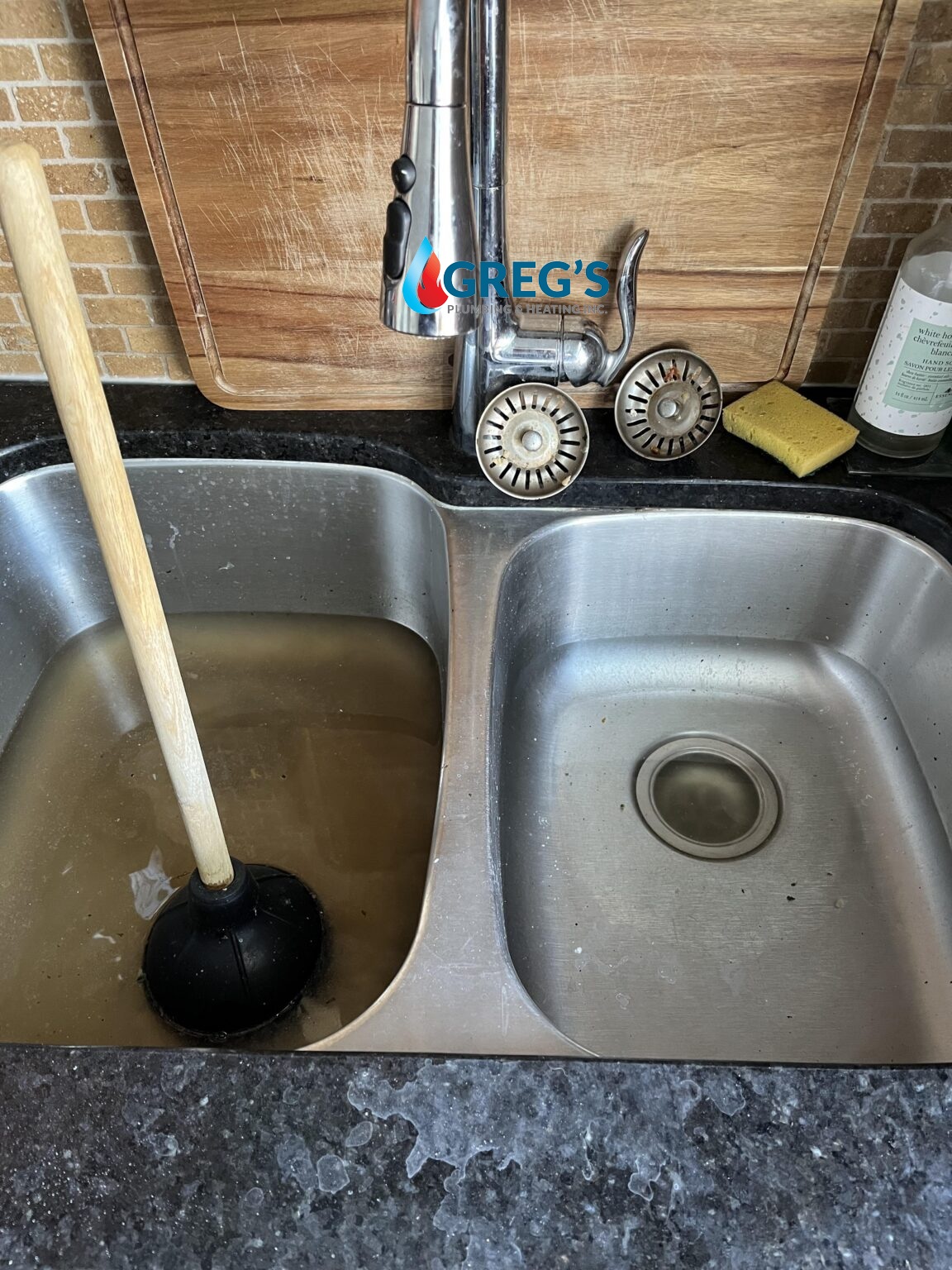
If the sink drains a bit and then slows again, repeat once or twice. If nothing changes at all, move on.
4) Clean the P trap if you have basic DIY comfort
This is one of the most common spots for kitchen clogs, and it’s usually safe to check if the plumbing is in decent shape.
Good time to try it:
- The clog is only in the kitchen.
- You can see slip nuts (hand-tight plastic or metal nuts) and the pipes are not badly corroded.
Skip it and call if:
- The piping is old metal that looks rusted, swollen, or fragile.
- You see signs of previous leaks, warped cabinet bottom, or mould.
How to do it:
- Put the bucket under the trap.
- Loosen the slip nuts slowly.
- Remove the trap and dump it out.
- Rinse it and check for packed grease, coffee grounds, and food.
- Reinstall and hand tighten first, then a small extra snug if needed.
5) Try hot water and dish soap for grease
This is a safe first move for grease buildup.
- Squirt a generous amount of dish soap into the drain.
- Follow with hot tap water (not boiling) for a minute or two.
- Pause, then run hot water again.
This helps soften and move grease, especially if the clog is partial. If the sink is fully blocked and water is standing, this is less effective.
6) Use a hand auger if plunging does nothing
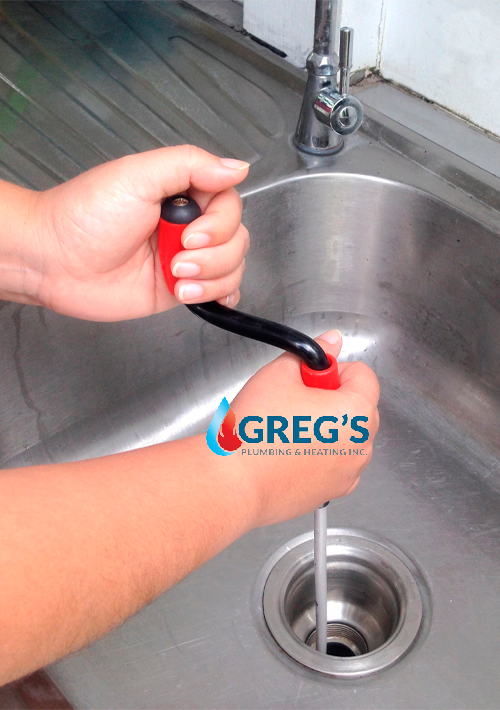
A hand auger (small drain snake) can break up grease and food buildup beyond the trap.
- Feed the cable into the drain and crank slowly.
- When you feel resistance, do not force it. Work it back and forth.
- Pull it out, wipe it clean, and repeat.
- If you hit resistance very quickly and it feels solid, you may be at a tight bend or a deeper blockage.
If you keep pulling back greasy sludge and the drain improves, you’re on the right track. If you feel like you cannot get past a point, stop before you damage fittings.
Not sure how severe your clog is? Run it through our quick tool and we’ll point you to the right next step. Drain Clog Severity Checker
What not to do with a clogged kitchen sink
Some “quick fixes” cause more problems than the clog itself.
- Do not use chemical drain cleaners. They can damage seals and older piping, and they make the drain dangerous to work on afterward.
- Do not keep dumping boiling water down the drain. It can soften or warp some plastic piping and may stress older joints.
- Do not over-tighten slip nuts. Over-tightening can crack plastic, deform washers, and create slow leaks that ruin cabinets.
- Do not force a snake aggressively. If it binds, you can damage the trap arm, fittings, or push debris into a worse spot.
- Do not “power through” with constant running water. If the clog is deeper, you can back up into the dishwasher, overflow the sink, or create a mess under the cabinet.
If the clog keeps returning, it often needs proper cleaning, not stronger chemicals. drain cleaning in Hamilton
Red flags that it’s not just the kitchen
Most kitchen clogs are local. But a few signs suggest the blockage is farther down the line, or you’re dealing with a main drain issue.
Multiple fixtures are slow
If the kitchen sink is slow and the bathroom sink or tub is also slow, that’s not typical of a simple P trap clog.
It usually means the restriction is in a shared drain line, or the main drain is starting to load up.
You hear gurgling, especially after other fixtures run
Gurgling is air being pulled through water because the drain is struggling to breathe or move flow.
If you hear the kitchen drain gurgle when the toilet flushes, or when the laundry runs, treat that as a warning.
Sewage smell that comes and goes
A greasy kitchen clog can smell bad, but it usually smells like old food.
A sewer-type smell, especially if it shows up near floor drains or basement areas, can point to deeper drainage problems.
Water rises in a basement floor drain
This is a big one.
If you run the kitchen sink, dishwasher, or washing machine and you notice water in a basement floor drain, you’re no longer dealing with a simple kitchen clog.
If that is happening, read this next: basement floor drain backing up or smells
Backup after laundry runs
Laundry dumps a lot of water fast.
If the kitchen sink backs up right after a laundry cycle, or the dishwasher drains and the sink fills, the restriction is often beyond the kitchen branch line.
What to do if you see these red flags
Stop running water. The goal is to avoid turning a partial blockage into a full backup.
If you need help right away, this is the right service page to understand next steps: sewer backup repairs
How Greg’s clears kitchen sink clogs the right way
A kitchen clog is not always the same clog. The right fix depends on where it is, what it is made of, and how the plumbing is laid out.
If you need same day help, our Hamilton plumbers can clear the clog and check for main line warning signs.
Step 1: Confirm where the blockage is
The first job is figuring out whether it’s sitting in the P trap, the kitchen branch line, or farther down.
We do the same quick checks you can do at home, then verify with on-site testing so we are not guessing.
Step 2: Choose the right method for the pipe and the clog
Grease clogs behave differently than food buildup or a blockage caused by broken buildup downstream.
For many kitchen clogs, a proper drain cable with the right head clears the restriction without damaging the line.
If the symptoms point to a deeper issue, we switch approaches so the fix actually holds.
Step 3: Watch for venting and “main line” warning signs
Some kitchen backups are made worse by poor venting or a main drain that is partially blocked.
That’s why we listen for gurgling, check how other fixtures behave, and look for anything that suggests the problem is bigger than one sink.
Step 4: Confirm flow and clean up
After clearing, we confirm the drain is moving freely and not just “a bit better.”
Then we put everything back cleanly and leave the cabinet area dry.
Step 5: Prevention tips based on your home
Older Hamilton-area homes can have older pipe materials or long kitchen runs that clog more easily.
Homes in Burlington, Ancaster, Dundas, Stoney Creek, Grimsby, Binbrook, Caledonia, and Niagara Falls can see similar issues, especially where grease, coffee grounds, and food scraps have had years to build up.
We give simple prevention steps based on what we actually see, not generic advice.
Preventing kitchen sink clogs in Hamilton homes
Most kitchen clogs are not sudden. They build up slowly as grease, soap, and tiny food particles coat the inside of the pipe.
If you change a few habits, you can usually cut the number of clogs way down.
Use the sink like a drain, not a garbage can
The biggest long-term cause is food scraps going down the drain.
Even if the sink “handles it,” the pipe pays for it later. Small bits catch on greasy walls and start a clog that grows over weeks.
Grease is the real culprit, even when it looks harmless
Grease does not stay liquid for long in a drain. It cools, sticks, and traps everything else.
Let grease cool in a container, then throw it in the garbage. Wipe oily pans with paper towel before washing if they are very greasy.
Coffee grounds belong in the green bin, not the drain
Coffee grounds do not dissolve. They pack together and sit in the trap or the branch line like wet sand.
If your sink clogs often and you use a lot of grounds, this is worth changing right away.
Strainers work better than you think
A simple sink strainer catches rice, pasta bits, and vegetable peels that cause most kitchen clogs.
It’s not fancy, but it is one of the most reliable preventers.
Do a weekly hot-water flush the safe way
Once a week, run hot tap water for 30 to 60 seconds at the end of the day.
Add a small squirt of dish soap first if your household cooks with a lot of oil. This helps keep grease softer and moving.
Avoid pouring boiling water as a routine. Hot tap water is usually enough, and it is gentler on many setups.
Be careful with disposals
A disposal is not a drain-cleaning tool.
If you have one, run cold water while it is on, and keep fibrous foods and starchy scraps out of it. Potato peels, pasta, rice, celery, and onion skins are common troublemakers.
If your home has older piping, be extra cautious
Some older homes in Hamilton and nearby communities have drain lines that catch buildup more easily.
If your sink clogs frequently despite good habits, it may need a proper cleanout rather than more DIY attempts.
For prevention tips you can stick to, read this: how to prevent clogged drains
FAQ: Clogged Kitchen Sink
Why does my kitchen sink keep clogging?
Most repeat clogs come from grease buildup that never fully clears.
It can also be a partial blockage farther down the kitchen line. The sink may drain “okay” for a while, then clog again as soon as more debris sticks to the same spot.
Why does my kitchen sink gurgle when it drains?
Gurgling usually means the drain is pulling air through water because flow is restricted.
Sometimes it’s a local clog. Sometimes it’s a sign the main line is struggling, especially if other fixtures cause the kitchen to gurgle too.
Is Drano safe for kitchen sink clogs?
For most homes, it is not the best choice.
It can damage older plumbing and seals, and it makes the drain dangerous to work on after. If it does not clear the clog, you are left with a pipe full of caustic chemical that still needs mechanical cleaning.
Why is my dishwasher backing up into the sink?
Dishwashers drain into the same kitchen line. If that line is partially blocked, the dishwasher pump can push water up into the sink instead of down the drain.
If this happens, stop running the dishwasher until the drain is cleared.
Can a clogged kitchen sink mean the main drain is blocked?
Yes, sometimes.
If you have multiple slow drains, gurgling, sewage smell, or water showing up in a basement floor drain, treat it as a main drain warning.
What if my kitchen sink drains slow but other drains are fine?
That’s usually a local issue in the trap or the kitchen branch line.
It often responds to the safe fixes in this guide, especially a proper plunge or cleaning the trap. If it keeps coming back, the line likely needs proper cleaning.
When should I book a professional drain cleaning?
Book service if the clog returns within days or weeks, plunging does nothing, or you see red flags like gurgling with other fixtures, sewage smell, or any basement floor drain activity.
That’s where a proper cleanout saves time and prevents damage.
How long does drain cleaning take?
Many kitchen clogs can be cleared quickly once the blockage is located.
If the issue is deeper, or if the drain needs a more thorough cleaning, it can take longer. The important part is confirming good flow at the end, not just getting the water moving again.
Next step
If your kitchen sink is clogged and you want it handled properly, you can call or book online.
Greg’s Plumbing & Heating serves Hamilton, Burlington, Ancaster, Dundas, Stoney Creek, Grimsby, Binbrook, Caledonia, and Niagara Falls.
For professional drain cleaning, start here


