
When a main sewer line starts to clog, it rarely shows up as one slow sink. It shows up as weird, scattered symptoms that get worse fast if you keep running water.
We see this across Hamilton and nearby areas like Burlington, Ancaster, Dundas, Stoney Creek, Grimsby, Binbrook, Caledonia, and Niagara Falls, especially in homes with older sewer laterals or lots of tree cover.
Quick answer: is it the main line or one fixture?
AA main sewer line clog usually shows up as a pattern, not one slow drain.
Signs it’s likely the main line
- More than one fixture is affected, especially the lowest drains in the home
- A toilet gurgles or bubbles when you flush or when another drain runs
- A basement floor drain burps or backs up when the washer, shower, or dishwasher drains
If you’re seeing basement floor drain symptoms, start here: basement floor drain backing up or smells.
If more than one drain is acting up, it’s usually time to book professional clearing: drain cleaning.
Signs it’s likely a single fixture clog
- Only one sink, tub, or toilet is slow and everything else is normal
- Plunging helps, even if it only improves things for a short time
If the symptoms mainly show up when the washer drains or during spin, this guide can help you stop damage fast: laundry drain backing up in Hamilton.
Signs it’s likely a single fixture clog
- Only one sink or tub is slow and everything else is normal.
- Plunging helps briefly, even if the problem comes back later.
First steps you can do safely (no chemicals)
1) Stop using water if the lowest drain is reacting
If a basement floor drain is bubbling, “burping,” or rising, stop running water in the home. That includes the dishwasher, laundry, showers, and extra toilet flushes. A main line clog can turn a small backup into a flood fast when more water gets added.
If you’re getting water on the floor, follow this step by step guide right now: Sewer Backup in Hamilton first hour checklist.
If you want a City of Hamilton overview of what causes sewer backups and blocked drains, read sewer backups and blocked drains, then come back here for the immediate do this now steps.
2) Only plunge if it’s clearly one fixture
A plunger is fine when it’s one sink, one tub, or one toilet and everything else is draining normally.
If multiple fixtures are slow, or a floor drain is reacting, skip plunging. You can force water and debris into a worse spot or push a partial blockage into a full one.
3) Find the cleanout only if you already know where it is
Some homes have a cleanout cap in the basement near the main drain line or close to the foundation wall.
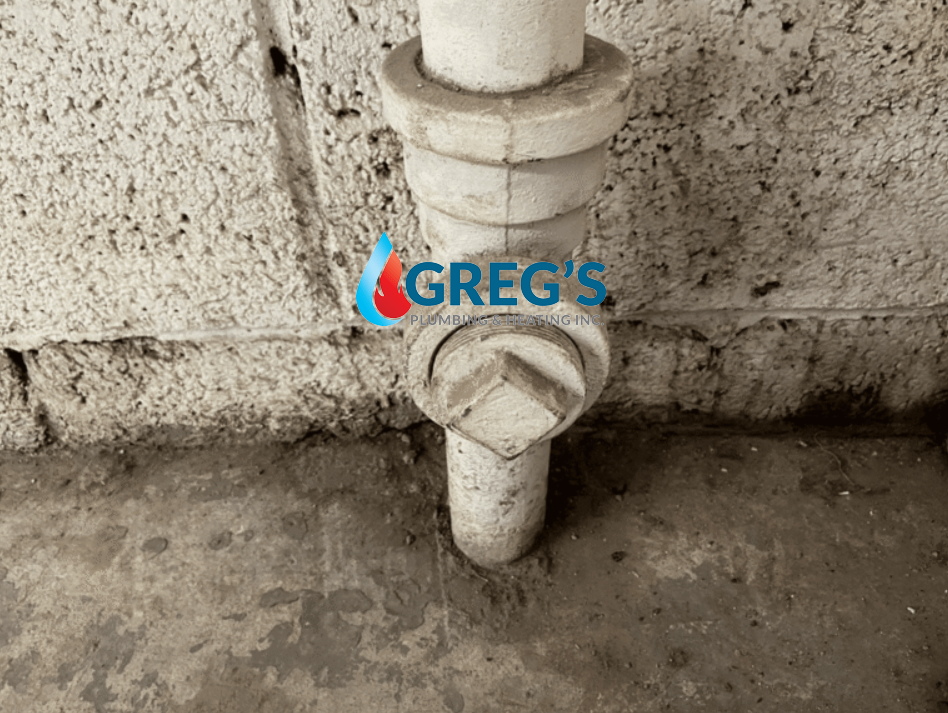
If you already know where it is and it’s accessible, clear the area around it so a plumber can get to it quickly. Do not open it if you suspect the line is backed up. A backed-up cleanout can release sewage under pressure.
4) Avoid chemical drain cleaners
Chemical drain cleaners are not a good fit for main sewer clogs. They often sit in the pipe without clearing anything, and they create a safety hazard for anyone who has to cable the line afterward.
5) Take two quick photos to speed up diagnosis
Before anything changes, take two photos:
First, the lowest drain that’s showing symptoms, like a basement floor drain, shower, or toilet.
Second, a wider photo showing where the water is appearing or how high it rose. If there’s a cleanout nearby, include that area in the frame too.
Those two photos help confirm whether this is a main line pattern and where the best access point is.
Common causes in Hamilton homes
Main line clogs usually come from one of two things: buildup that slowly narrows the pipe, or a physical problem that keeps catching debris. Here are the most common causes we see locally.
Tree roots in older neighbourhoods
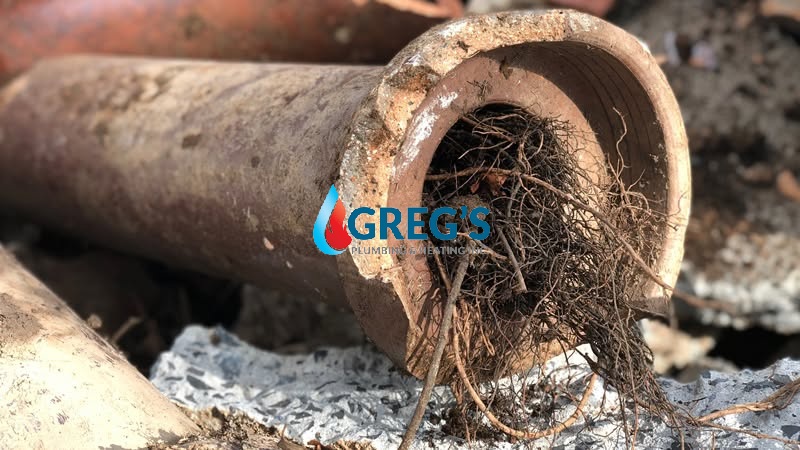
Roots are a big one in areas with mature trees and older sewer laterals. A tiny crack or joint gap is enough for roots to find moisture.
At first, you might only notice slow drains after heavy water use. Over time, roots create a net that catches paper and waste, and the backups become more frequent.
Grease buildup from kitchens
Grease does not stay liquid in a sewer line. It cools, sticks to the pipe wall, and gradually narrows the line until normal household flow overwhelms it.
This is especially common when the kitchen sink is used like a food drain. If your problem seems to start with kitchen symptoms, begin here: Clogged Kitchen Sink in Hamilton.
Wipes and paper products that do not break down
Even if a package says “flushable,” many wipes do not break down like toilet paper. They twist together and snag on rough pipe interiors, roots, or offsets.
If you have kids, tenants, or guests, wipes are one of the easiest ways for a main line to clog without warning.
Bellies or offsets in older sewer lines
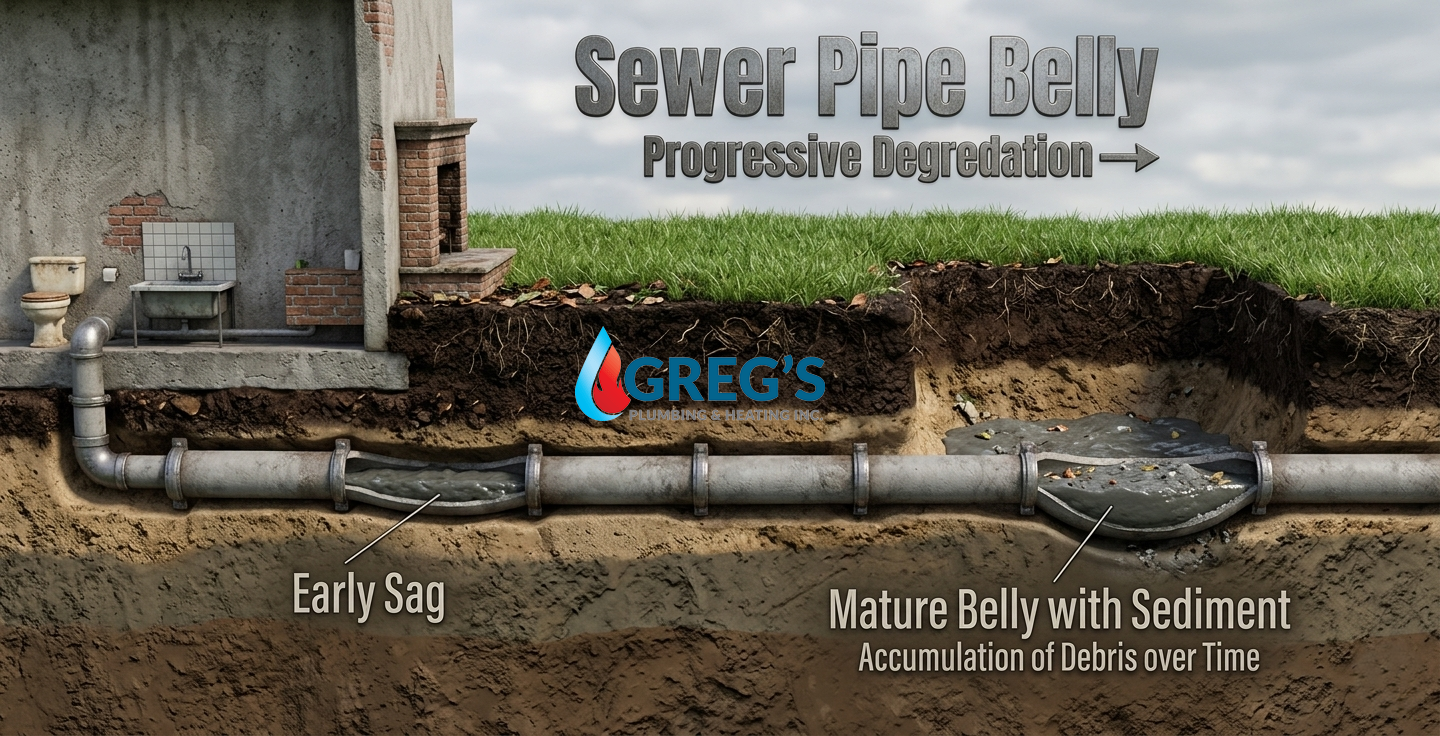
A belly is a low spot in the sewer line where water and debris collect instead of flowing through. An offset is when two pipe sections no longer line up perfectly.
Both create a catch point. You may clear the line today and still get another clog next month because the underlying shape of the pipe hasn’t changed.
Freeze-related issues (seasonal)
During deep cold snaps, an outside section of the drain line can become sluggish if there’s already buildup inside, or if the pipe has a low spot holding water.
It’s rarely “just freezing” on its own. Cold weather usually exposes an issue that was already close to clogging, especially if symptoms show up after heavy water use.
If you suspect freezing is part of what changed, read frozen pipes in Hamilton for safe next steps and what not to do.
When a camera inspection is worth it
If you keep clearing clogs but they come back, a camera inspection can save money by finding the real cause.
A camera inspection is simply a small waterproof camera sent through the drain line. It shows what’s actually inside, so you’re not guessing whether it’s roots, a belly, a broken section, or just heavy buildup.
Book a camera inspection here.
It’s worth it when clogs repeat
If you’ve had more than one backup in a short period, especially within a few months, a camera helps explain why.
Clearing the line without knowing the cause is like mopping up water without fixing the leak.
It’s worth it when multiple drains are involved
If your symptoms are happening across the home, or the basement floor drain reacts when laundry runs, that’s a strong reason to confirm what’s going on in the main line.
It’s worth it if roots are suspected
If you’ve got mature trees and repeat clogs, roots are high on the list. A camera confirms it and helps plan the right fix.
It’s worth it after the line is cleared
A camera is often most useful after the clog is removed. That’s when we can confirm the line is truly open and see any damage or problem spots clearly.
What we do on a same day visit
The goal is to stop the backup, confirm what caused it, and make sure water can flow normally again.
First, we check the pattern and the lowest drains
We start by confirming which fixtures are affected and where the backup is showing up.
That helps us decide if we’re dealing with a single branch line or the main sewer line, and it tells us the best access point to use.
Then we clear the line mechanically
Main line clogs are cleared with the right equipment for the type of blockage.
Most of the time that means cabling from the best access point. In some cases, a different approach is needed based on what the blockage is and where it’s sitting.
If it makes sense, we confirm with a camera
If the issue is repeat, roots are suspected, or the symptoms suggest a physical problem in the pipe, a camera inspection helps confirm the cause.
That’s how you avoid clearing the same clog over and over without fixing the reason it comes back.
Before anything major, you’ll understand the plan
You’ll know what we found, what we recommend, and what the next steps are before work proceeds.
End result: confirmed flow and practical prevention
We confirm water is moving the way it should, then we’ll give a few simple prevention tips based on what we actually saw.
If you want to book service, start here: Book drain cleaning in Hamilton.
FAQs: Main Sewer Line Clog in Hamilton: Warning Signs and First Steps
How do I know it’s the main sewer line and not one drain?
If more than one fixture is affected, you hear gurgling, or the basement floor drain reacts when another fixture runs, it’s often the main line. If it’s only one sink or tub and everything else is normal, it’s more likely a local clog.
Why does my floor drain back up when the washer runs?
The washer dumps a lot of water fast. If the main line is partially blocked, that surge can push water up at the lowest opening, which is often the basement floor drain.
Are chemical drain cleaners safe?
They’re not a good choice for main line issues. They often do not clear the blockage and they create a safety hazard for anyone who needs to cable the line afterward.
Do you always need hydro jetting?
Not always. Many clogs clear with standard mechanical methods.
Jetting can be useful when buildup is heavy or the line needs a deeper clean, but it depends on pipe type, condition, and what’s causing the blockage.
When should I stop using water and call right away?
Stop right away if water is coming up from a floor drain, you smell sewage, multiple drains are slow, or water is getting on the floor.
If you need urgent help, start here: drain cleaning.
How long does drain clearing take?
Some clogs clear quickly once we access the right point. Others take longer if the blockage is deep, heavy, or caused by roots or pipe issues.
Can you come same day in Hamilton?
Same day help is often possible depending on the time of day and demand. If water is rising, treat it as urgent.
Will the clog come back?
It can, especially if the underlying cause is roots, a belly, or an offset. That’s where a camera inspection becomes valuable, because it shows why it’s happening.


