
Most slow drains are just buildup. But when clogs keep coming back, or symptoms spread from one fixture to another, it’s often not grease or hair anymore. It can be a drain line that’s cracked, shifted, or partially collapsed, and cleaning alone won’t solve it for long.
This guide gives you quick clarity, a few safe checks you can do without making a mess, and the red flags that mean it’s time to stop DIY and get a proper diagnosis. If you need help, start with clogged pipes and drains, or book a drain cleaning visit if you need flow restored quickly. For scheduling, you can also Book Online.
Quick answer
Drain repair is more likely when clogs return quickly, multiple fixtures act up, there’s gurgling or sewer odour, or you’re seeing water marks, damp patches, or worsening symptoms right after cleaning. Cleaning removes blockages and buildup. Repair fixes a drain pipe that’s broken, shifted, rooted, bellied, or collapsing.
Drain cleaning vs drain repair (the simple difference)
Drain issues fall into two buckets. One is a blockage you can remove. The other is a pipe problem that keeps creating blockages.
Drain cleaning solves buildup and blockages
Drain cleaning is the right call when the pipe is basically intact, but it’s narrowed by things that stick and accumulate.
Common examples are grease, wipes, scale, hair, food scraps, and soap scum. In many homes, a proper clean restores normal flow and the problem stays gone.
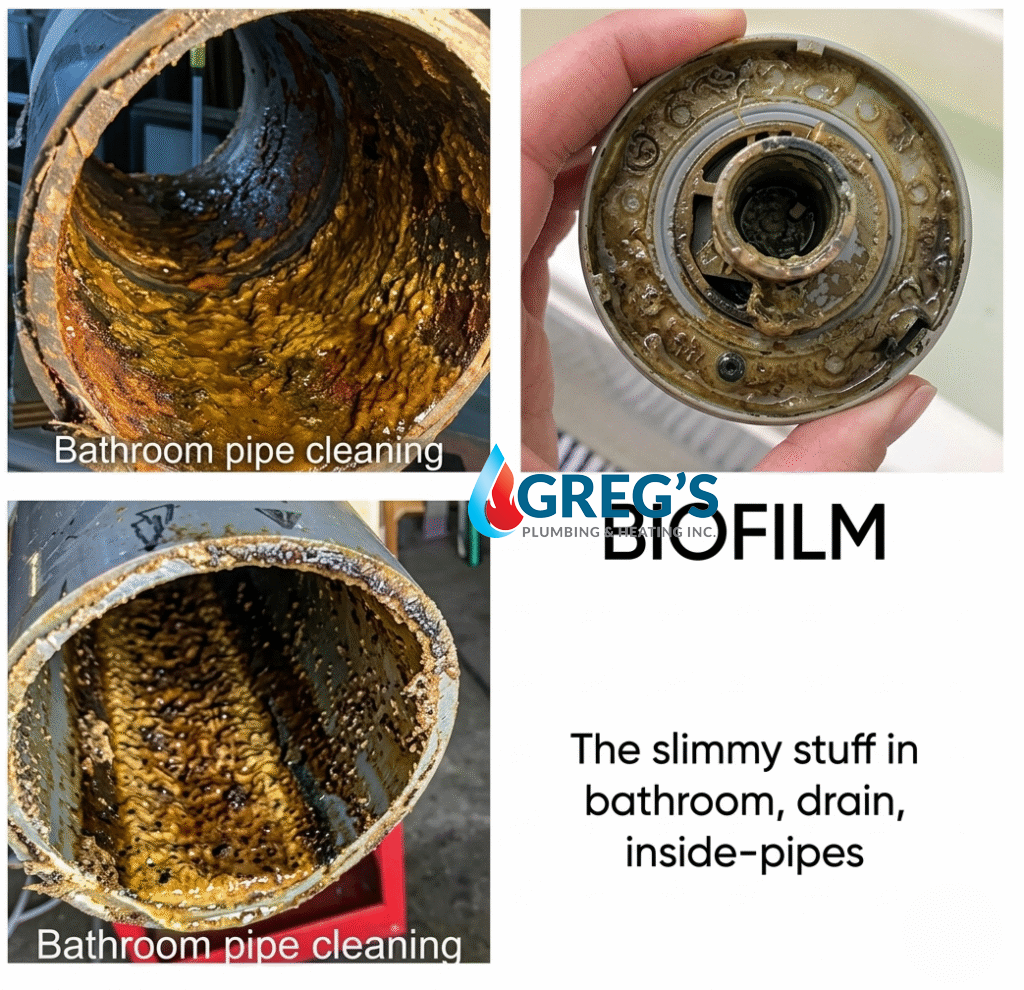
If you’re dealing with a slow kitchen sink or repeat kitchen clogs, start with our guide on clogged kitchen sink fixes in Hamilton, and if more than one drain is affected or the clog keeps returning, drain cleaning is usually the right next step.
Drain repair solves structural problems
Drain repair is what you need when the pipe itself is the reason the clog keeps coming back.
That can be a cracked pipe, a joint that shifted out of alignment, a low spot that holds water and solids, root intrusion through tiny gaps, internal corrosion, or a partial collapse.
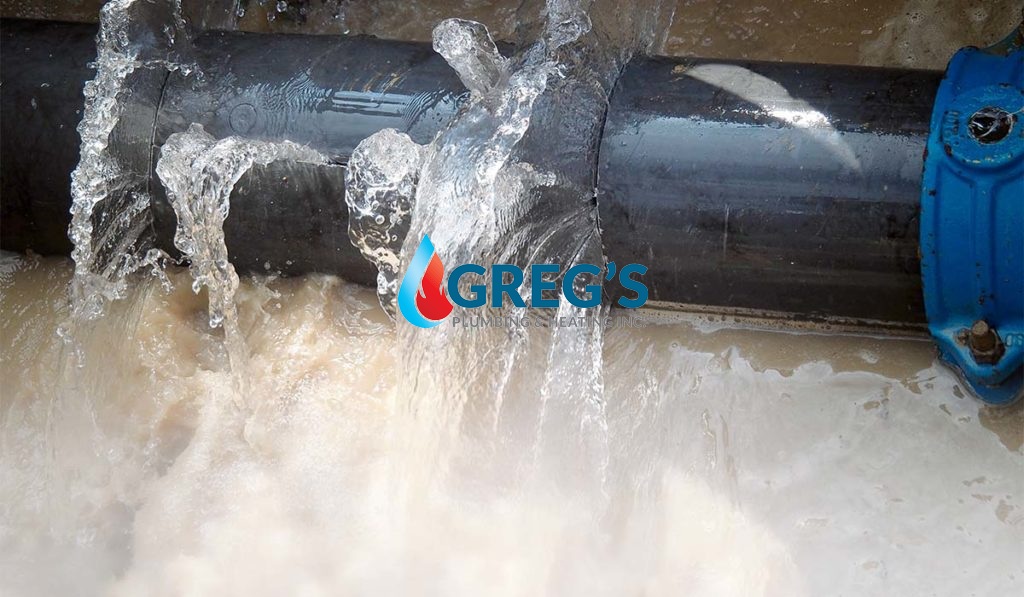
In those cases, cleaning may help briefly, but it won’t stop the cycle.
Quick symptom guide (skim this)
| Symptom | More likely cause | Best next step |
|---|---|---|
| Same clog returns within days or weeks | Partial collapse, roots, belly, offset joint | Inspection and repair plan |
| Multiple fixtures slow or backing up | Main line restriction or damage | Main line diagnosis |
| Gurgling toilet or bubbling drains | Air trapped by restriction | Diagnose branch vs main |
| Sewer smell that comes and goes | Partial blockage or dry trap from siphoning | Find the restriction |
| Water marks near a floor drain | Backup reaching the lowest point | Stop using water and assess |
| Soggy patch in yard | Leak or break in buried line | Locate and repair |
10 signs you likely need drain repair (not another snake)
If you’re seeing a repeat pattern, it’s usually not “bad luck.” It’s often a drain line that’s catching debris or failing in one spot.
- The clog returns within days or weeks after clearing
- More than one fixture backs up, like a toilet plus tub, or sink plus laundry
- You hear gurgling drains or a toilet bubbles when you flush
- There’s a sewer smell that comes and goes
- You see water marks or dampness near a basement floor drain
- There’s a soggy patch in the yard or a wet spot that does not dry
- Backups happen after heavy rain, even with careful water use
- Plunging or snaking “helps” briefly but never solves it
- The home has older drain materials and connections that catch debris
- Everything changes suddenly and drains slow across the home at once
If sewage is involved or the floor drain is rising, don’t keep testing. Start with sewer backup repairs or, if there’s active flooding risk, emergency plumbing.
The most common drain repair causes in Hamilton homes
Hamilton has a lot of older housing stock, mature trees, and mixed drain materials. That combination creates a few repeat patterns.
Tree roots and shifting soil
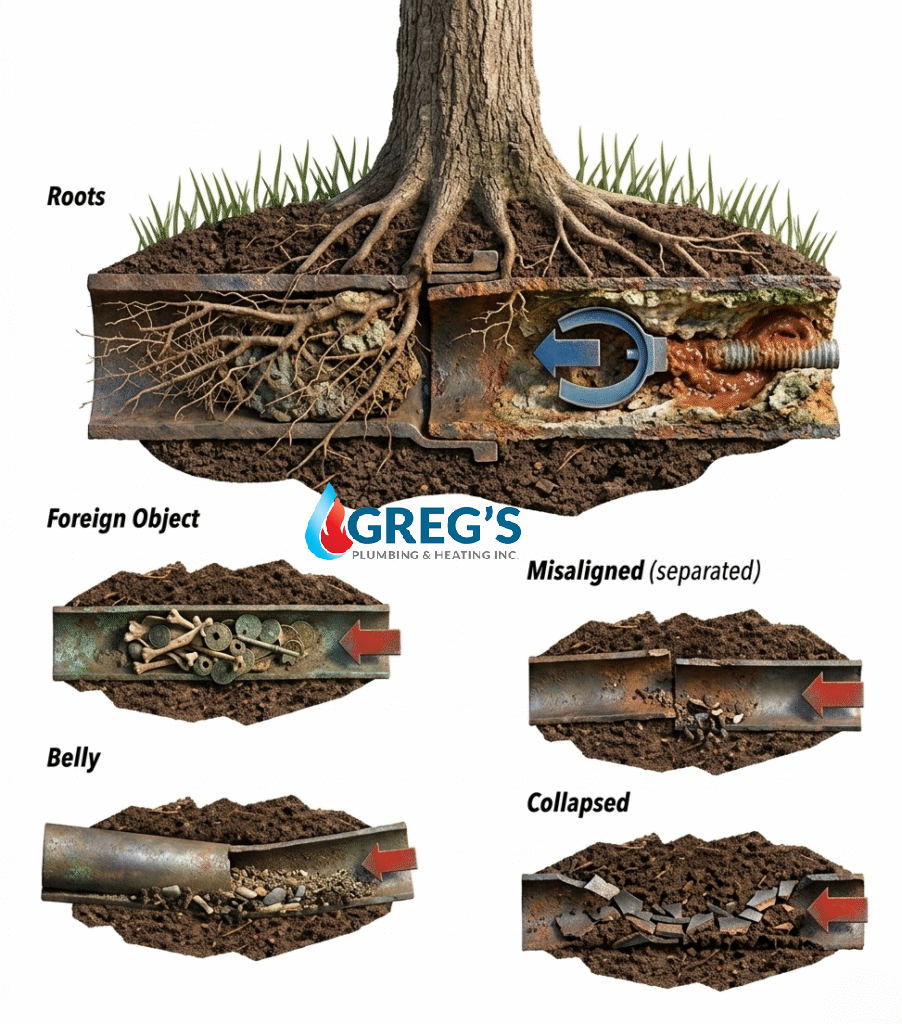
Roots look for moisture and can enter through tiny joint gaps in older lines. Once inside, they catch debris and create repeat blockages. Shifting soil can also move pipe sections just enough to create a ledge that snags paper and solids.
Older homes and aging drain materials
Older cast iron and clay lines can roughen and flake inside, which makes buildup stick faster. Some older materials and joints also don’t tolerate shifting as well, so offsets develop over time.
“Bellies” in the line that hold water and solids
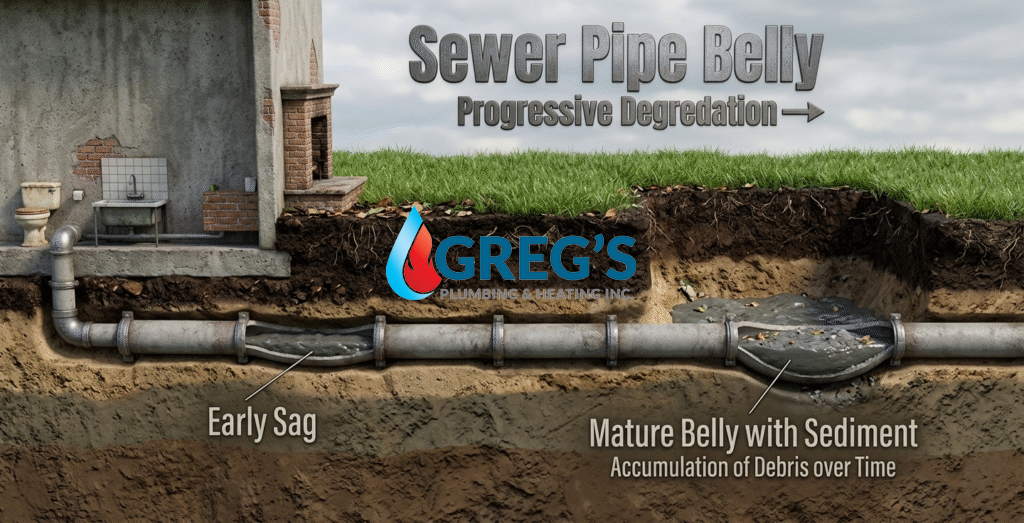
A belly is a low spot in the pipe. Water slows there, solids settle, and clogs repeat. Snaking may poke through, but the low spot still holds debris and the problem returns.
Repeated clogs that hide a bigger problem
If you’ve had the same clog multiple times, it’s often a sign that something is catching debris in the same location every time. That’s where a camera inspection becomes the difference between guessing and fixing.
DIY chemicals and aggressive snaking damage
Chemical drain cleaners can be rough on older piping and seals. Aggressive snaking can also damage weaker sections or push debris into a worse spot. If the line is already compromised, these can speed up failure.
Safe checks you can do before calling (no damage, no mess)
You don’t need to take anything apart. The goal is to notice the pattern.
Check whether it’s one fixture or many
If only one sink is slow and everything else is fine, it’s usually a local clog.
If multiple fixtures are slow, or the toilet starts acting up when another drain runs, treat it like a bigger drain line issue.
See if it worsens when the washer or dishwasher drains
Laundry and dishwashers dump a lot of water quickly.
If problems show up during drain and spin, or right after the dishwasher empties, that often points to a restriction deeper in the line.
Listen for gurgling
Gurgling is air struggling through water because flow is restricted.
If you hear gurgling in one drain when another fixture runs, it’s a useful clue that the issue may not be isolated.
Check the basement floor drain
A basement floor drain is often the lowest point in the system.
If it ripples, burps, smells, or shows water after other fixtures run, stop using water and treat it as an early warning sign of a bigger backup.
If there’s a sewage smell, stop and ventilate
A sewer odour that comes and goes can mean a partial blockage or backup movement in the line.
Stop running water, open a window, and avoid chemical drain cleaners.
Stop sign
Do not keep running water if you see backup. It can turn a minor problem into flooding fast.
What a proper drain repair visit looks like (what to expect)
This is what “real diagnosis” looks like, so you know you’re not paying for guesswork.
Step 1 — Confirm whether it’s branch line or main line
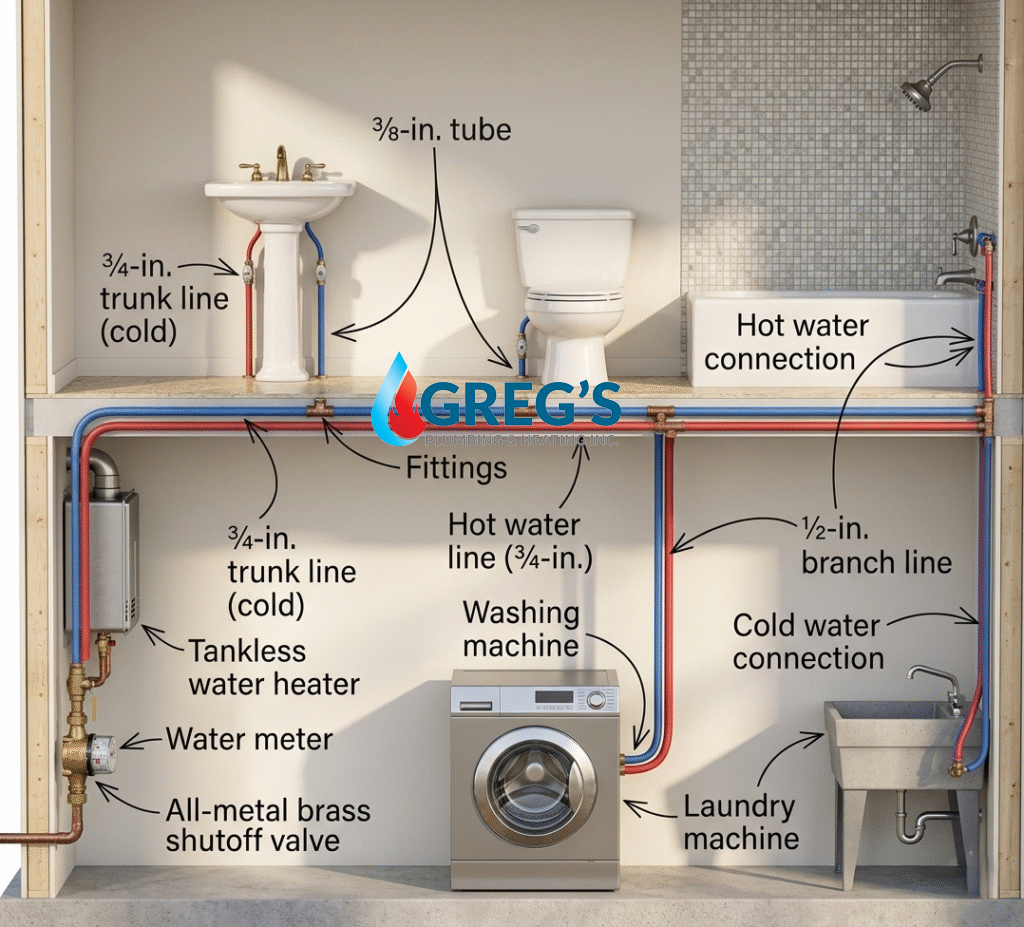
We check which fixtures are affected and how the symptoms behave.
This tells us whether we’re dealing with a single branch line (like a kitchen or bathroom run) or the main drain.
Step 2 — Camera inspection to find the real cause and exact location
A camera inspection shows what the pipe actually looks like inside.
That’s how we confirm roots, an offset joint, a belly, corrosion, or a break, and it lets us locate where the issue is before any repair decisions are made. Learn how our on site process works here: Drain and Sewer Camera Inspection in Hamilton.
Step 3 — Clear the blockage if needed to restore flow
If the line is blocked, restoring flow comes first.
We clear it safely so the camera can see the pipe clearly and so you can use the home again. For standard clearing, see: drain cleaning.
Step 4 — Recommend the right repair option
Once we know the cause and location, we recommend the right fix.
That might be a spot repair, replacing a damaged section, adding a cleanout if access is poor, or setting up a root-control plan if roots are the real issue. If the line is severely damaged, we’ll explain what a full replacement plan would involve.
Drain repair options explained (pros, cons, best fit)
Not every “repair” means digging up the whole yard. The right option depends on the cause and the location.
Spot repair (small damaged section)
Best when the damage is limited to one small area and the rest of the line is in decent shape.
This is common for a cracked joint, a short collapsed section, or a localized offset.
Replacing a section of pipe
Best when a longer stretch is compromised, or the pipe material is failing over time.
This is often the right call when repeated clogs are caused by rough internal surfaces or multiple weak joints in the same area.
Addressing root intrusion properly
Roots can often be cleared, but if they keep returning, the real fix is sealing or replacing the entry point.
A root-control plan can help in the short term, but it’s not a substitute for repairing a broken or separated joint.
When hydro-jetting helps (and when it won’t)
Jetting can help when the pipe is structurally sound but coated with heavy buildup.
It won’t fix a belly, a collapse, or a broken joint. Here’s the comparison: hydro jetting vs snaking in Hamilton.
How to prevent repeat drain problems after repair
Once a drain line is repaired, the goal is to keep it flowing smoothly and to avoid feeding buildup.
The biggest wins are simple habits in the kitchen and bathroom, plus not using the drain as a garbage can. For a deeper guide, use these two posts rather than guessing:
- Why your drains keep clogging and how to prevent it for good
- How to prevent clogged drains: expert tips from Greg’s Plumbing
If your repair involved roots, keep an eye out for early warning signs again. Repeat symptoms are usually easier to handle when caught early.
When to stop DIY and call a plumber right away
DIY is fine for a simple, one fixture clog. It’s not fine when sewage or multiple drains are involved.
Call now if
- Sewage is backing up in a tub, shower, or floor drain
- More than one fixture is affected at the same time
- Water is coming up from a basement floor drain
- There’s a persistent sewer smell that does not go away
- You’ve had the same clog more than once recently
If the issue is active and worsening, start here: emergency plumbing.
If you need service for recurring clogs and backups, start here: clogged pipes and drains.
For clearing and restoring flow, book: drain cleaning.
FAQs
What’s the difference between drain cleaning and drain repair?
Drain cleaning removes buildup and blockages inside an otherwise usable pipe.
Drain repair fixes the pipe itself when it’s cracked, shifted, bellied, rooted, corroded, or partially collapsed. If a clog keeps returning quickly, repair becomes more likely.
How do I know if my problem is the main sewer line?
Main line problems usually show up as a pattern. More than one fixture acts up, toilets gurgle or bubble, and the lowest drain in the home is often affected first.
If a basement floor drain is reacting when other fixtures run, treat it like a main line warning.
Can a plumber repair a drain without digging up the whole yard?
In many cases, yes. The right approach depends on where the damaged section is and what caused it.
A camera inspection helps locate the issue so the repair can be targeted instead of guesswork.
Do recurring clogs always mean a broken pipe?
Not always. Some recurring clogs are heavy buildup that needs proper cleaning.
But if clogs return within days or weeks, involve multiple fixtures, or come with sewer smells or gurgling, drain damage or a structural issue becomes more likely.
Is it safe to use chemical drain cleaners?
For many homes, it’s not the best choice. Chemicals often don’t solve the real problem, can be hard on older pipes and seals, and make the drain unsafe to work on if mechanical clearing is needed.
What does a drain camera inspection show?
It shows the inside of the pipe so you can see roots, offsets, bellies, cracks, corrosion, or a collapse. It also helps confirm whether the line is truly clear after a blockage is removed.
Why do my drains gurgle when I flush?
Gurgling is often air being pulled through water because flow is restricted. It can happen with branch line clogs or with main line restrictions, especially when multiple fixtures are affected.
What should I do first if sewage backs up in my basement?
Stop using water right away and keep people away from the affected area. Ventilate if you can, and avoid chemical drain cleaners.
If there’s active backup or flooding risk, go straight to emergency plumbing and book help.


