
Quick answer
Laundry drain backups usually mean the laundry branch line is restricted, or the main drain is starting to clog. Stop the washer right away. If you see water rising in a floor drain, notice a sewage smell, or other fixtures start draining slowly, treat it like a main line issue and stop running water in the home.
A washer can dump a lot of water fast, especially during drain and spin. That is why laundry backups can turn into a flood in minutes, even if everything seemed fine earlier in the day.
If you’re dealing with a kitchen drain issue too, read our latest post on clogged kitchen sink fixes in Hamilton.
First, stop damage safely
Pause the washer and stop more water from entering the drain
Hit Pause or Cancel on the machine. If it is in the middle of draining and you cannot stop it, unplug it only if the plug and your hands are dry and the area is safe.
If the washer is still filling, turn the water supply valves off at the wall. Most homes have hot and cold shutoffs right behind the machine.
Contain the spill and protect nearby finishes
If water is on the floor, get towels down right away and use a mop or wet vac if you have one.
Keep water away from baseboards and door thresholds. Even clean water can swell laminate and damage drywall quickly.

Keep water away from electrical outlets and devices
Laundry areas often have outlets, power bars, and extension cords nearby.
If water is moving toward anything electrical, do not step into pooled water to reach cords. Move items only from a dry spot, and shut off power at the breaker if needed.
Pay attention to what the water looks and smells like
If the backup water is grey and smells like detergent, it is usually coming from the washer discharge.
If it smells like sewage, or you see darker water coming up from a floor drain, stop using water in the home and treat it as urgent. Emergency plumbing
Fast test to tell a local laundry clog vs a main line issue
You do not need special tools for this. You just need to see whether the problem is isolated to the laundry drain or happening across the home.
Test 1: Bathroom sink test
Run the bathroom sink for 10 to 15 seconds.
If it drains normally and stays normal, the problem is more likely in the laundry branch line.
If it drains slowly or you hear gurgling, that is a sign the restriction may be deeper.
Test 2: Toilet test
Flush one toilet once and watch for anything unusual.
If it flushes strongly and refills normally, that supports a local laundry issue.
If it flushes weakly, bubbles, or you hear gurgling in nearby drains, stop adding water.
Test 3: Basement floor drain check
If you have a basement floor drain, take a quick look while the washer is backing up, or right after you stop the cycle.
If water is rising there, even a little, treat it like a main drain warning. That is when backups can spread from one area of the house to another.
If that is what you are seeing, read this next: basement floor drain backing up or smells
What the results usually mean
If only the laundry is acting up, you are likely dealing with lint, soap scum, or buildup close to that drain.
If multiple fixtures are slow, or a floor drain is reacting, it is safer to assume the main line is restricted and avoid running water until it is cleared.
Common causes in Hamilton homes
Laundry drain backups usually come down to buildup plus a lot of water moving quickly.
Lint and fabric fibres
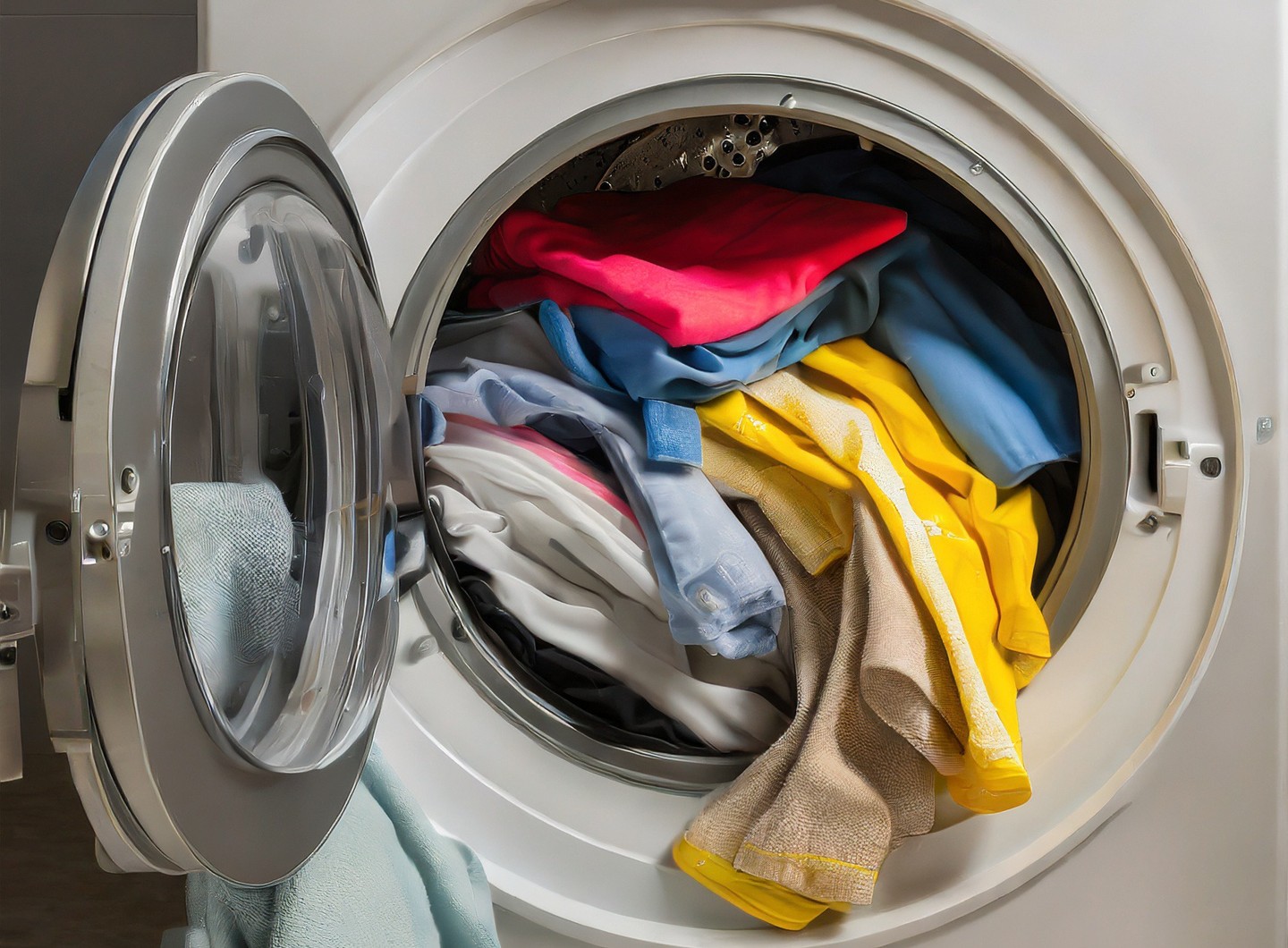
Even with a lint screen, a washer sends fine fibres into the drain.
Over time, lint sticks to damp pipe walls, especially where the drain line is slightly rough inside. That lint then traps hair, soap scum, and debris.
Detergent and softener buildup
Too much detergent can leave residue that acts like glue inside the pipe.
Liquid softeners can do the same thing. You do not notice it day to day, but it narrows the drain line until the washer discharge overwhelms it.
Shared branch lines
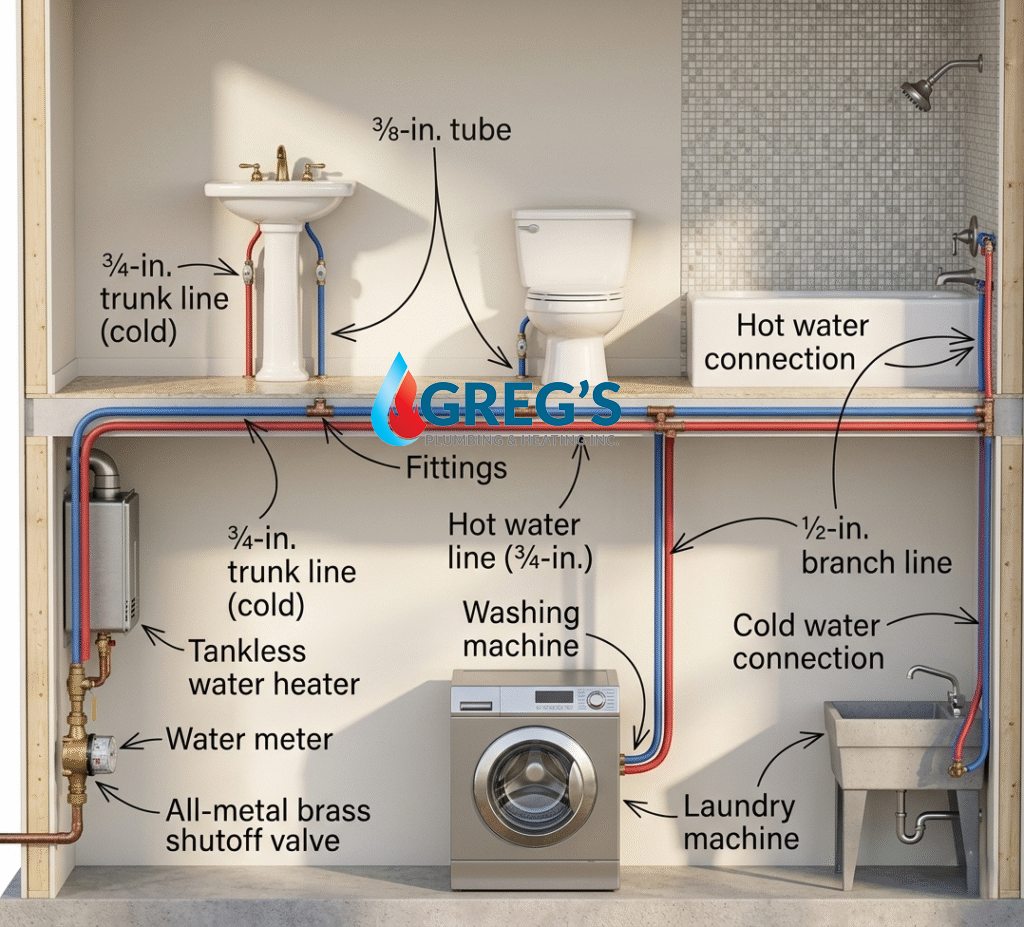
In many homes, the laundry drain shares a branch with a nearby sink, floor drain, or other fixture.
That is why a laundry issue can sometimes show up as gurgling in another drain, even if the washer is the trigger.
Standpipe or hose setup issues
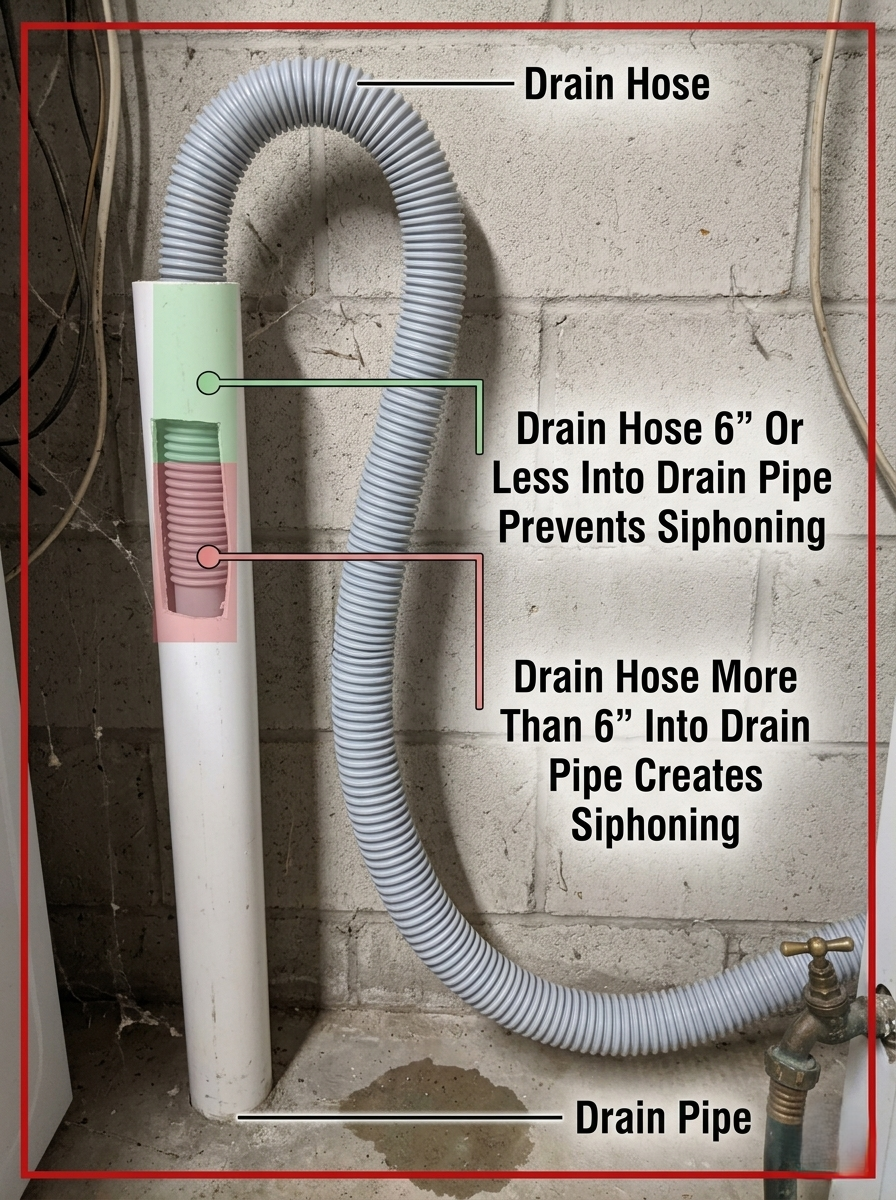
If the washer drain hose is shoved too deep into the standpipe, or the standpipe is the wrong height, it can cause poor draining and overflow.
Sometimes the line is only partially blocked, and a less-than-ideal setup pushes it over the edge.
Older piping and partial restrictions
Older homes can have drain piping that is more prone to catching buildup.
A partial restriction may handle normal use, but the washer discharge during drain and spin is a stress test. When it fails, it fails fast.
Roots and outside line issues
If the washer backup happens along with slow drains elsewhere, the cause can be farther out, including root intrusion in older laterals.
That is not something to guess at with chemicals or more water. It needs proper diagnosis and clearing.
What you can try that is actually safe
Start with the simple checks that do not risk damaging the plumbing. The goal is to reduce overflow risk and rule out the obvious causes.
Clean what you can clean first
If your washer has a lint trap or a filter, clean it. Many front-loaders have a small pump filter behind a lower access panel. It can be packed with lint, coins, and debris.
A clogged filter can slow draining and make a backup look like a plumbing problem.
After cleaning it, try a small rinse and drain cycle with someone watching the standpipe or laundry sink.
Check the drain hose placement
Pull the washer out enough to see the hose.
Make sure the hose is not kinked. Also make sure it is not shoved too far down the standpipe. If the hose is too deep, it can cause poor flow and splashing or overflow.
You want the hose secured, but not jammed into the pipe.
Confirm the standpipe is not overflowing from the top
If water is spilling from the top of the standpipe, that usually means the drain cannot take the washer’s discharge rate.
That is different from a leak in the hose. If it is overflow, you are dealing with a drainage restriction, not a washer supply leak.
If you have a floor drain, plunge only if it is clean water
Only do this if the backup water is clearly washer water and there is no sewage smell.
Add a bit of water to cover the plunger cup and plunge with short, firm pushes. If the water is dirty, smells like sewage, or the floor drain is actively bubbling, stop. Plunging can push a main line problem into a worse backup.
What not to do here
Skip chemical drain cleaners. They rarely solve a laundry clog and they make the drain unsafe to work on if the clog does not clear.
Also avoid forcing a power snake if you are not comfortable. Laundry drains often have tight bends and older fittings that can be damaged by aggressive DIY snaking.
After you try the safe steps, you can sanity-check severity here: Drain Clog Severity Checker
When to stop DIY and call
Laundry backups are one of those problems where stopping early can prevent real damage.
Water is rising fast or threatening outlets
If water is spreading across the floor, stop experimenting. At that point, the priority is preventing flooding and electrical risk.
The backup returns right away
If you clear a little lint, adjust the hose, and it still backs up on the next cycle, the restriction is not just at the washer.
Repeat backups usually mean the branch line needs proper clearing, or the main drain is involved.
You notice gurgling or other drains slowing down
If a sink, tub, or toilet starts acting up around the same time, treat it like a system issue.
That is when running more water can cause a bigger backup somewhere else in the home.
Any sewage odour or dirty water
If it smells like sewage, or the water looks darker than typical washer water, stop using water and get help. That is not a situation for chemicals or trial-and-error.
The basement floor drain is reacting
If a basement floor drain fills or ripples when the washer drains, you are likely beyond a simple laundry clog.
In those cases, these are the right next-step pages:
How Greg’s handles laundry backups
Laundry backups can look simple on the surface, but the right fix depends on whether the restriction is in the laundry branch line or farther down the drain.
If you need same day help, our Hamilton plumbers can clear the backup and check for main line warning signs.
Step 1: Confirm the scope before clearing
We start by confirming what is affected and how the drains are behaving.
If it is only the laundry drain, that points to a local restriction. If other fixtures are slow or a floor drain is reacting, we treat it like a main drain issue and work from the right access point.
Step 2: Clear the blockage safely for the pipe and layout
Laundry clogs are often lint and soap buildup. That can pack into a tough, fibrous plug.
We use the right equipment and heads for the job so we clear the restriction without damaging fittings or pushing debris into a worse spot.
Step 3: If it keeps happening, we find the reason
If the backup is a repeat problem, clearing once is not enough.
We look at likely contributors such as partial restrictions farther down, shared branch lines, venting concerns, or issues outside the home.
If roots or a damaged section of pipe are suspected, a camera inspection may be recommended so you are not guessing. Book a camera inspection now.
Step 4: Verify flow and leave the area clean
A proper fix is not just “it drained once.”
We verify strong flow at the end, then clean up the area so the laundry space is usable again.
Prevention for laundry drain clogs
Most laundry backups are avoidable with a few small habits and a quick check once in a while.
Capture lint before it reaches the drain
Lint is a major cause because it does not dissolve. It clumps and holds onto soap scum.
If you do a lot of laundry, consider a simple lint catcher on the discharge hose, and clean it regularly. Even without add-ons, cleaning the washer filter helps.
Use the right amount of detergent
More detergent does not mean cleaner clothes.
Overdosing can leave residue in the drain line that traps lint and narrows the pipe. If you have a high-efficiency washer, use HE detergent and follow the dosing lines.
Watch how the drain behaves during spin
Pay attention during the drain and spin portion.
If you see the standpipe water level rising higher than usual, or you hear gurgling, treat it as an early warning. That is often when you can fix a partial restriction before it turns into a flood.
Winter and heavy rain can expose weak drains
In winter, more indoor laundry plus colder drain lines can make buildup more likely to stick.
During heavy rain, older drainage systems and partially restricted main drains can show symptoms sooner. If your laundry backup happens during storms, that is a useful clue that the issue may not be only the laundry line.
When prevention is not enough
If you have repeated backups, the right move is proper drain cleaning and, if needed, diagnosis of the main line so you are not dealing with surprise flooding again.
FAQ: Laundry drain backing up in Hamilton
Why does my washing machine drain keep backing up?
Most laundry backups are caused by lint and soap buildup narrowing the laundry branch line. The washer discharges a lot of water quickly, so even a partial restriction can overflow during drain and spin.
Can a laundry backup mean a sewer line problem?
Yes. If multiple fixtures are slow, you hear gurgling, notice sewage odour, or a basement floor drain reacts when the washer drains, treat it like a main drain warning.
Should I use drain cleaner for a laundry drain clog?
It is usually a bad idea. Chemical drain cleaners rarely clear lint-based clogs, can damage older plumbing, and make the drain unsafe to work on if the clog does not clear.
Why does the basement floor drain fill when the washer runs?
That usually means the restriction is farther down the line, often in a shared branch or the main drain. The washer discharge can push water to the lowest opening, which is often the basement floor drain.
What if the laundry drain backs up only during the spin cycle?
Spin and drain is when the washer pumps water out the fastest. A line that seems fine at low flow can overflow at high flow, which is classic for a partial blockage.
How do I know if roots are involved?
Roots are more likely when backups involve multiple fixtures or happen in patterns, such as after heavy rain, or when symptoms keep returning soon after being cleared. A camera inspection is the best way to confirm.
Do I need a camera inspection?
Not always. If it is a one-time local clog, a proper clearing may be enough. If backups repeat, involve other drains, or suggest roots or pipe damage, a camera helps pinpoint the cause.
How quickly can you come in Hamilton?
If there is active backup or flooding risk, treat it as urgent and call right away. Same-day help is often possible depending on demand and time of day.
Next step
If your laundry drain is backing up, stop running water and deal with it before it becomes a flood.
Greg’s Plumbing & Heating serves Hamilton, Burlington, Ancaster, Dundas, Stoney Creek, Grimsby, Binbrook, Caledonia, and Niagara Falls.
For professional help, you can call or use Book Online. If you suspect a bigger drainage issue, these pages are the right next steps:


